
Maintenance & Tune-Up in Bellwood
Garage Door Maintenance for Bellwood's 1950s Housing Stock
Bellwood's houses went up around 1955, a decade ahead of the area's median. That older stock means different hardware, and a maintenance visit that checks for it.
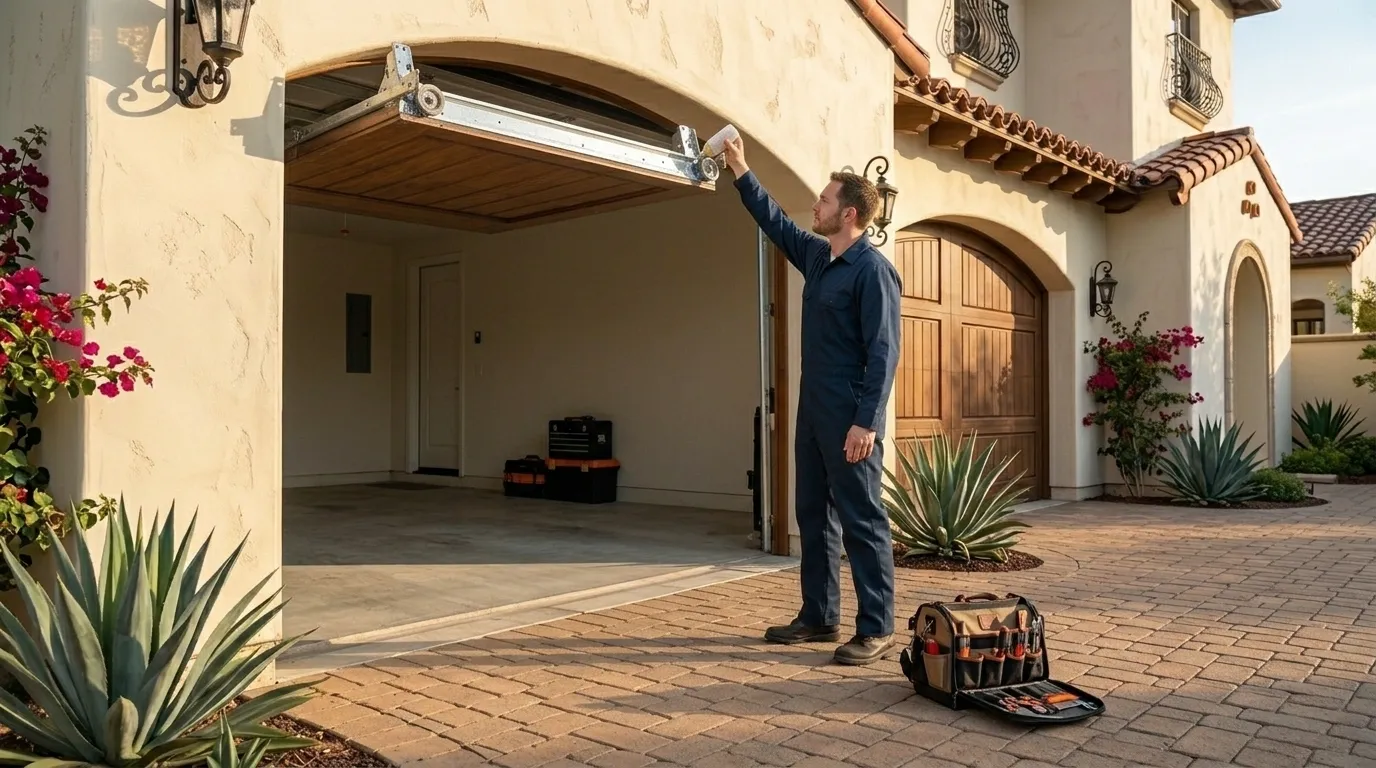
What Happens When You Call
-
1
Call or Request a Quote
Tell us what the door is doing and roughly how old the house is - that alone points us toward the likely part before a truck leaves.
-
2
On-Site Diagnosis
A tech checks the spring, cables, tracks, and opener in person and tells you plainly what is actually wrong.
-
3
Straight Price, No Surprises
You get a number before any work starts. It covers parts and labor, nothing added after the fact.
-
4
Fixed the Same Visit
Most repairs are done in one trip. If a part needs sourcing, we tell you that upfront instead of guessing.
Booking a Visit
We run this route from Oak Park, four miles out, so a Bellwood maintenance visit gets scheduled rather than dispatched same-hour. That's worth knowing up front: if a spring lets go today, call, but don't expect a truck sitting nearby. Maintenance visits are planned work, and planning around Bellwood's housing stock is exactly the point.
Homes here cluster around 1955, noticeably earlier than the 1965 median across the wider service area, so a technician heading your way already knows to bring parts sized for that era before ringing the bell. You can see what a standard visit covers on our Bellwood service page, and if you want the broader picture of what maintenance means across every town we cover, that's laid out on the Oak Park maintenance page. Book ahead where you can.
A door that's merely stiff or noisy has time to wait a few days; one that's off its track or won't seal doesn't, and that's a repair call, not a maintenance one.
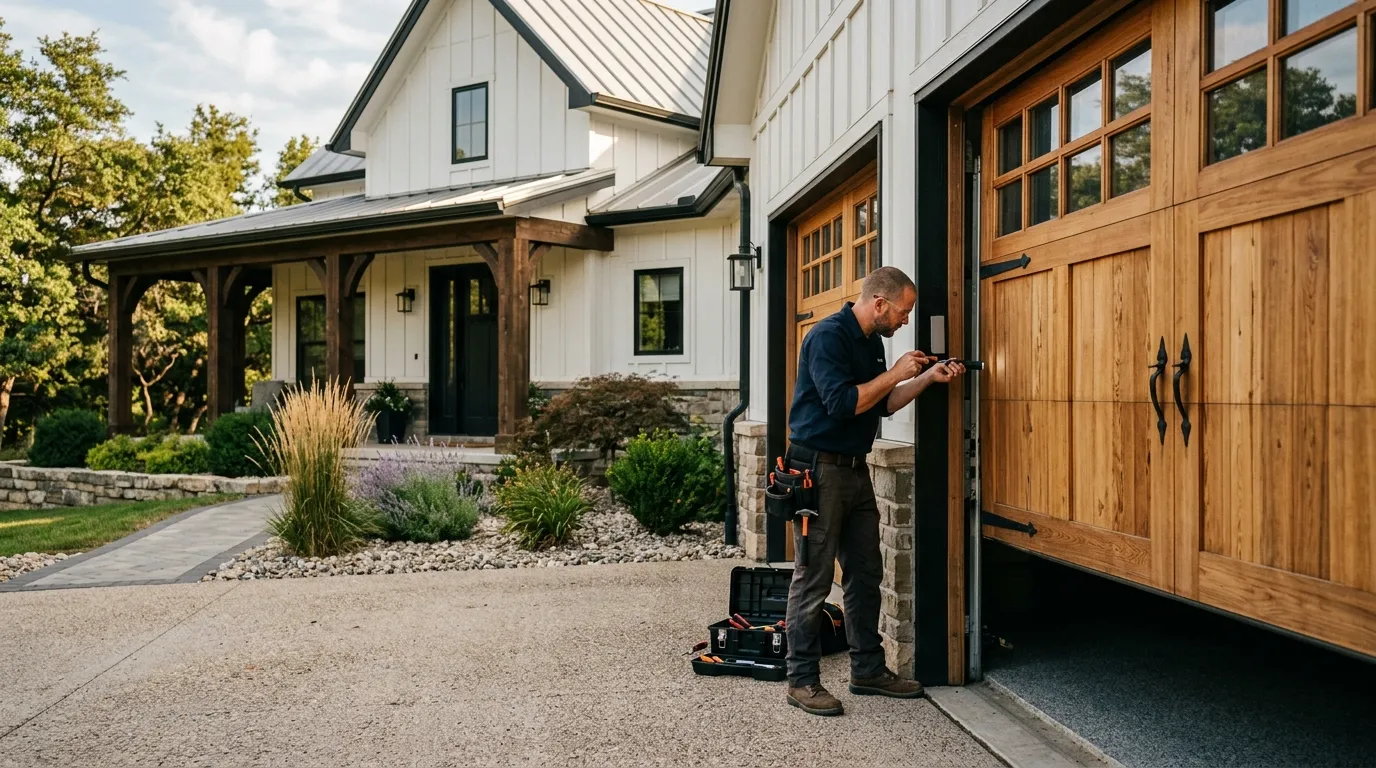
What the Repair Takes
On a house built around 1955, maintenance usually starts with the track alignment and the spring's wind count, because both were set up for lighter doors than what often hangs there now after a replacement decades back. We check hinge wear at the panel folds, test the auto-reverse if the opener was added later (most were, since openers weren't standard on houses this old), and look at the bottom seal for gaps that let cold air track in. None of this is dramatic work.
It's the kind of hour-long check that catches a spring three winds from failing instead of a spring that failed last Tuesday. We don't repaint or refinish doors as part of a maintenance visit, and we won't pretend a 60-year-old wood-panel door can be tuned to run like new steel. Sometimes the honest answer partway through is that the door's due for replacement, not another year of patching.
When that's the case we'll say so and let you decide.
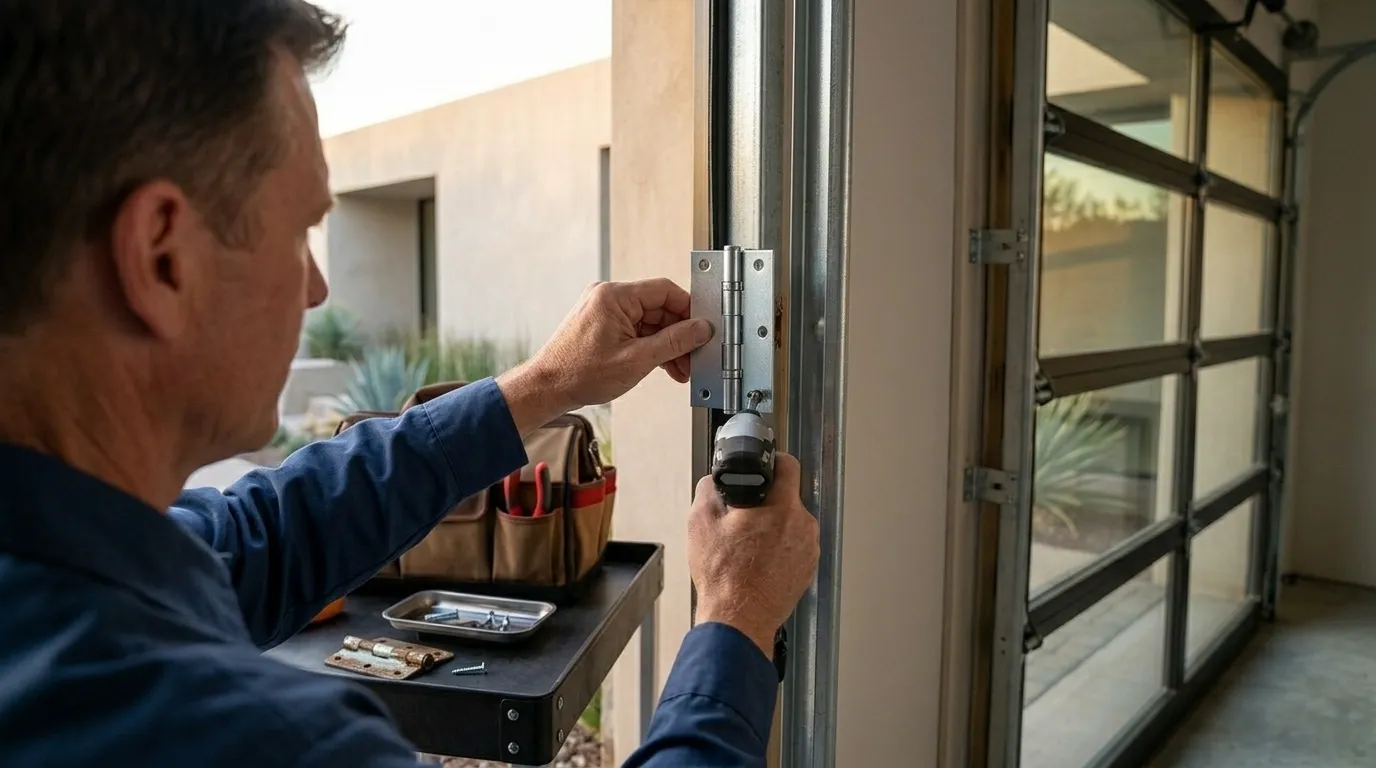
Why It Happens Here
Bellwood's housing didn't rise all at once. The bulk of it went up in the mid-1950s, ahead of the broader 1938-to-1994 build window that spans this whole service area, and that decade matters more than it sounds like it should. Doors and openers installed on houses from that stretch used lighter steel, smaller bearing tracks, and hardware sized to garages that were often single-car and shallow.
Later replacements sometimes fit oversized doors onto that original framing, which throws off spring tension in ways a newer subdivision never sees. Add a cold moderate climate that swings the steel and hardens the lubricant every winter, and you get the two failure patterns we see most from this stretch: springs that lose tension faster than the manufacturer's chart predicts, and tracks that were never quite plumb to begin with settling further out of true. Median household income here runs lower than the area's $83,975, which we mention only because it shapes a real choice: stretch a repair as long as it's safe, or replace once patching stops being cheaper.
How Long It Takes
A standard maintenance visit runs under an hour once the technician's on site - lubrication, hardware inspection, balance test, opener safety check. Where Bellwood adds time isn't the checklist, it's the diagnosis. On 1950s-era doors with mismatched replacement hardware, figuring out which parts are original and which were swapped in later can take longer than the maintenance itself.
If the door needs a part we don't carry on the truck, that's a second trip, not an extension of the first. We won't stretch a visit past what the door actually needs just to fill an hour, and we won't rush a balance check on hardware that's fighting itself. Most visits wrap clean.
The exception is a door where a prior repair used parts sized for a different door entirely, and those take the time they take.
Stocked Parts
Because so much of Bellwood's housing sits in that 1955-and-around window, we carry torsion springs and rollers sized for the lighter, older door frames common to that build era, not just the heavier stock that fits post-1994 construction. Bearings and end brackets from that period wear differently than modern ones, and having the right size on the truck is the difference between a finished visit and a return trip.
We don't stock every legacy part - some original hardware from that era simply isn't made anymore, and if your door needs one of those, we'll tell you rather than guess with a near-fit. That's the honest limit here: modern equivalents get installed when the original part is gone, and we're upfront about that swap before we make it.
The Symptom
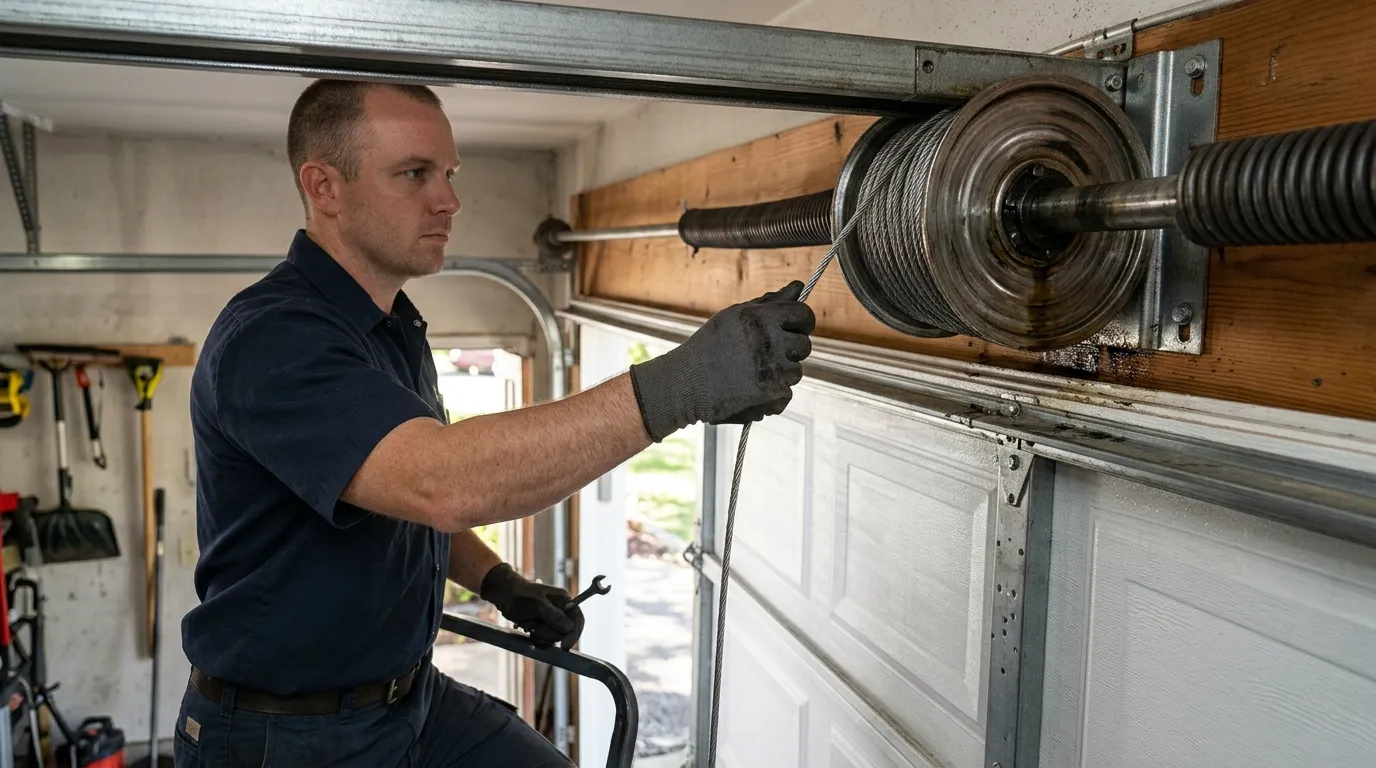
The complaint we hear most from this stretch is a door that's noticeably harder to lift by hand in January than it was in August - not stuck, just heavier, like the spring's giving less help than it used to. On houses from the mid-1950s, that's often the spring losing tension faster than expected because of a cold moderate climate cycling the steel every season, combined with hardware that was never upgraded when the door itself was replaced. The second most common symptom is a door that shudders or hesitates a few inches off the track, which usually traces back to alignment that was close enough for a decade but never exact.
Neither symptom means the door's done. Both mean it's due for a maintenance check before either becomes a call placed at 6am on a Saturday.
Talk to a Bellwood Technician First
Describe what the door is doing and get a straight answer on what it likely needs.
Other Garage Door Services in Bellwood
Recent Work in Bellwood
A look at jobs our crew has been on nearby.
Why Bellwood Calls Us
Frequently Asked Questions
How often should a Bellwood homeowner get maintenance done?
Once a year is standard for most doors, but if your house dates to the mid-1950s and still has original or older hardware, we'd lean toward checking it every year without fail. Older tracks and springs drift out of tolerance faster than newer equivalents, and catching that early is cheaper than an emergency spring call.
Do you carry parts for older Bellwood garage doors on the truck?
We stock springs, rollers, and bearings sized for the lighter door frames common to houses built around 1955, since that's the bulk of what we see on this route. Some original manufacturer parts from that era are no longer made, and in those cases we'll install a modern equivalent and tell you before we do it.
Is Bellwood covered by a local branch?
No. This route is run from Oak Park, about four miles away, so maintenance visits to Bellwood are scheduled rather than same-hour. For an active emergency, call and we'll get you the next available slot, but there's no truck stationed in town.
Need Maintenance & Tune-Up in Bellwood?
Call now for straight answers on cost and timing.