
Service
Garage Door Maintenance for Oak Park Homes
Garage door maintenance for Oak Park's 1938-1994 housing stock and cold winters. Learn what causes wear here and what a tune-up actually covers.
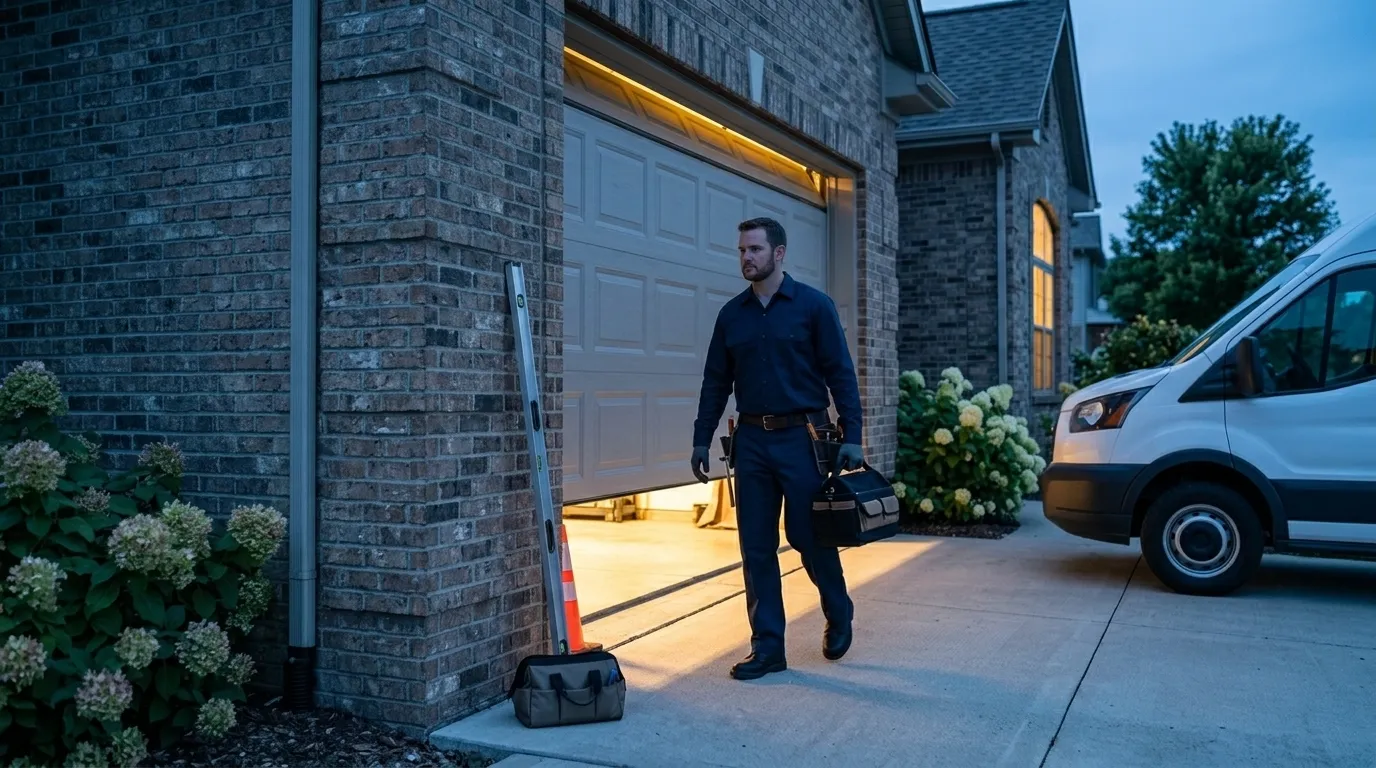
What Happens When You Call
-
1
Call or Request a Quote
Tell us what the door is doing and roughly how old the house is - that alone points us toward the likely part before a truck leaves.
-
2
On-Site Diagnosis
A tech checks the spring, cables, tracks, and opener in person and tells you plainly what is actually wrong.
-
3
Straight Price, No Surprises
You get a number before any work starts. It covers parts and labor, nothing added after the fact.
-
4
Fixed the Same Visit
Most repairs are done in one trip. If a part needs sourcing, we tell you that upfront instead of guessing.
What You Pay
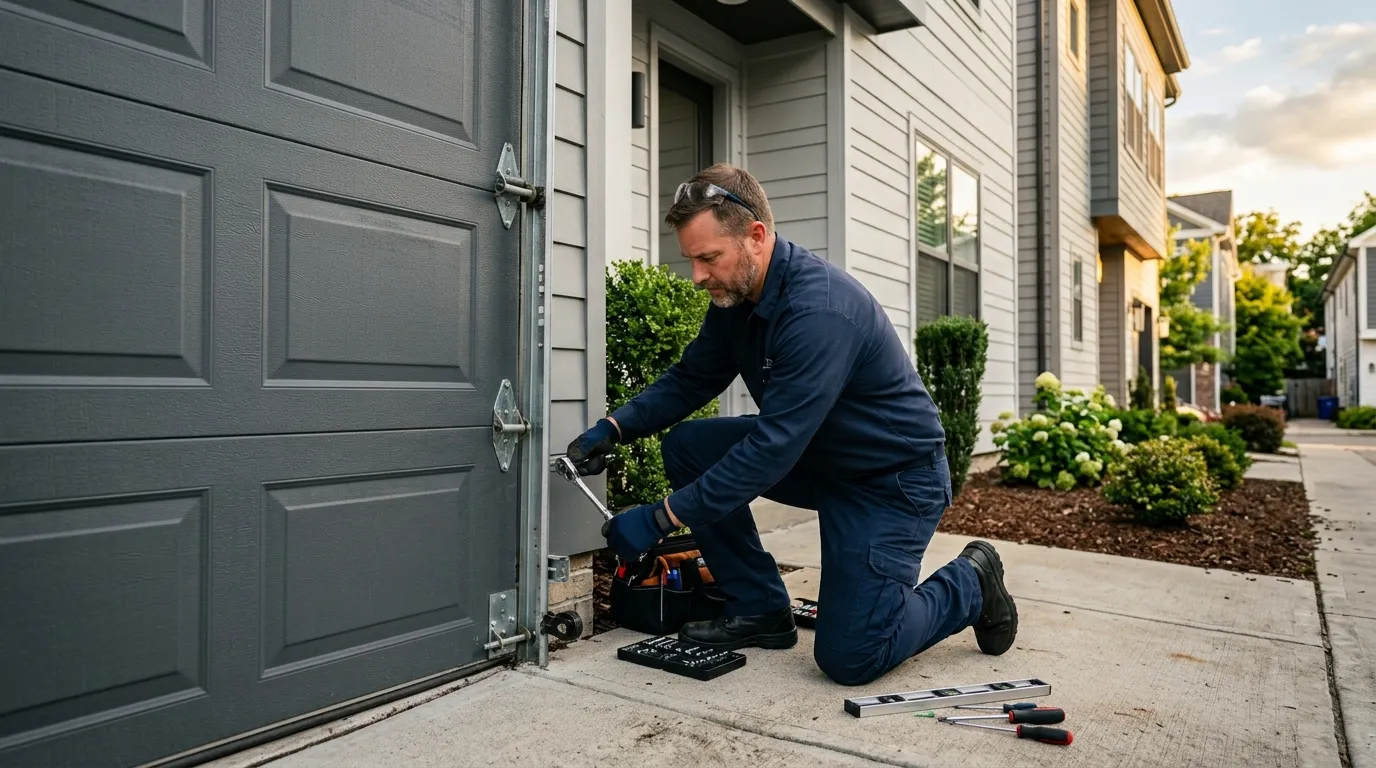
We don't post a flat number here because a tune-up on a 1960s single door with original hardware is a different job than one on a newer double door with a heavier opener. What we can tell you is what drives the cost: whether the springs need adjustment or replacement, how many rollers are worn past safe travel, and whether the track needs re-aligning versus just cleaning and lubricating. A basic maintenance visit covers spring tension check, hardware inspection, track alignment, roller and hinge lubrication, and a balance test on the opener.
If something turns up mid-visit - a cracked cable, a bent track section - we tell you before we touch it, not after. Given that most houses in this service area were built between 1938 and 1994, with a lot of stock from the 1960s and 70s, the parts on your door are often older than anything sold at a hardware store today, and that changes what a tune-up needs to include. We'd rather quote you after we've seen the door than guess over the phone.
Why It Happens Here
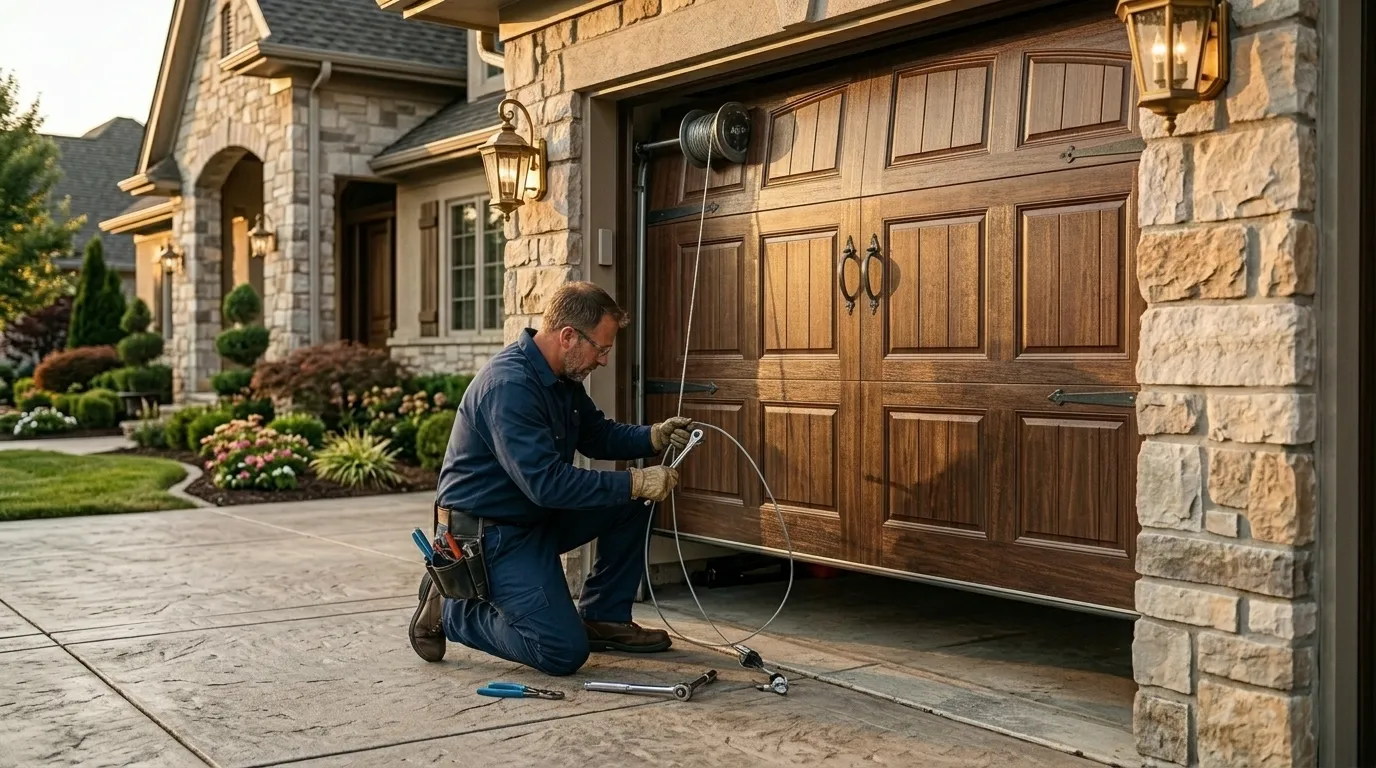
Median household age of construction in this service area sits around 1965, and doors and openers installed or replaced in that era used hardware that's mechanically simpler and less forgiving than what's sold now - single torsion springs sized for lighter doors, steel rollers instead of nylon, no auto-reverse safety sensors unless someone added them later. That older gear wears differently. Combine that with a cold moderate climate band: steel contracts in winter, grease stiffens, and a spring that's been fine all summer can bind or snap the first hard freeze.
Homes across the 85 named areas in this service area share this same pattern - older housing stock meeting seasonal temperature swings - which is exactly the combination that makes routine maintenance worth doing on a schedule instead of waiting for a failure. A door that's never been serviced since the house was built is not unusual here, and it's usually the reason a spring finally gives out on the coldest morning of the year.
The Complications
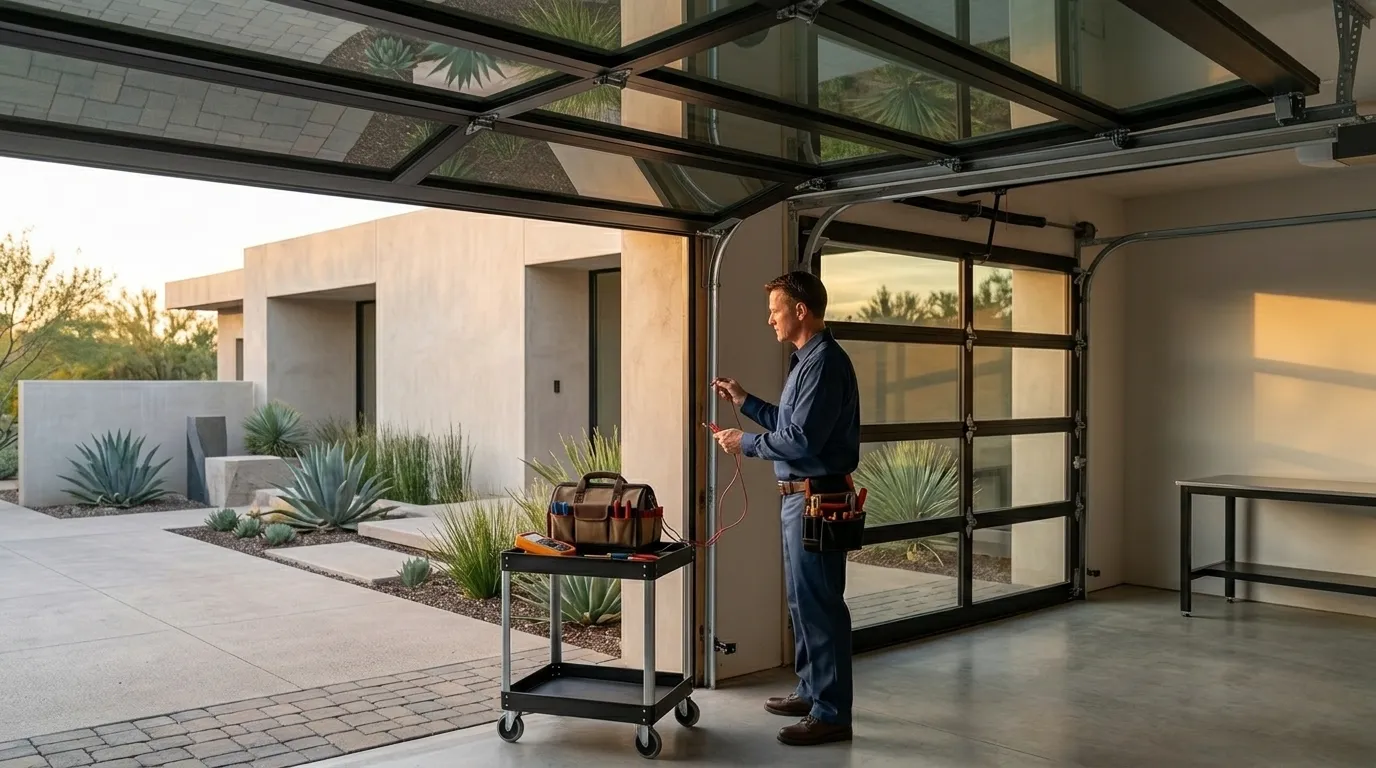
The complication with maintenance on older housing stock isn't the labor - it's parts. A door installed when a house went up in the 1960s or 70s may use a track width, spring size, or drum configuration that current manufacturers don't make anymore. We can often adapt or source an equivalent, but it sometimes means a return trip instead of a same-visit fix.
Cold-weather maintenance adds its own wrinkle: lubricant that works fine at 60 degrees can gum up at 10 degrees, so what we use matters more here than in a warmer climate. We're honest about the limit of a tune-up, too - if a spring is original to a house built in the 1960s, cleaning and lubricating it doesn't undo 60 years of cycle fatigue. At some point a tune-up turns into a spring replacement conversation, and we'll tell you when we're at that point instead of stretching a maintenance visit past what it can actually fix.
The Symptom
The pattern we see most in this service area starts small: the door hesitates a few inches off the floor, or it closes slightly crooked before straightening out. That's usually a spring losing tension unevenly, or a roller binding in a track that's shifted slightly over decades of freeze-thaw cycles. Homeowners often wait because the door still opens - it just sounds rougher, or the opener strains a little longer than it used to.
In a cold moderate climate, that strain gets worse fast once temperatures drop, because metal doesn't flex the way it does in summer. If your door has started making a new noise, hesitating, or closing unevenly, that's the window where maintenance still works - once a spring actually breaks, you're past maintenance and into a repair call.
Talk to a Technician Before You Book
Describe what the door is doing and get a straight answer on what it likely needs.
Jobs Like Yours
Recent work from this service line.
Why Oak Park Calls Us
Frequently Asked Questions
How often should I get my garage door serviced in Oak Park?
Once a year is a reasonable baseline given the cold moderate climate here, since seasonal temperature swings put more stress on springs and hardware than a steady climate would. If your door was installed before the 1990s, which is common in this service area, a slightly shorter interval catches wear before it becomes a breakdown.
Will maintenance fix a door that's already making noise?
Sometimes. If the noise is roller or hinge related, lubrication and adjustment usually solve it. If it's a spring losing tension unevenly, maintenance can catch it early, but a spring that's already failing needs replacement, not a tune-up. We'll tell you which one you're dealing with during the visit.
Do you work on older doors from the 1960s and 70s?
Yes, and it's most of what we see given the housing stock across this service area. Older hardware sometimes means sourcing an equivalent part rather than an exact match, since some original spring and track sizes aren't made anymore.
Need Garage Door Maintenance for Oak Park Homes?
Call now for straight answers on cost and timing.