
Opener Repair in Franklin Park
Opener Repair for Franklin Park's Older Garages
Franklin Park's 1950s garages carry openers that have outlived their parts. We travel 6 miles from Oak Park to fix chain-drive units, dead sensors, and worn gears.
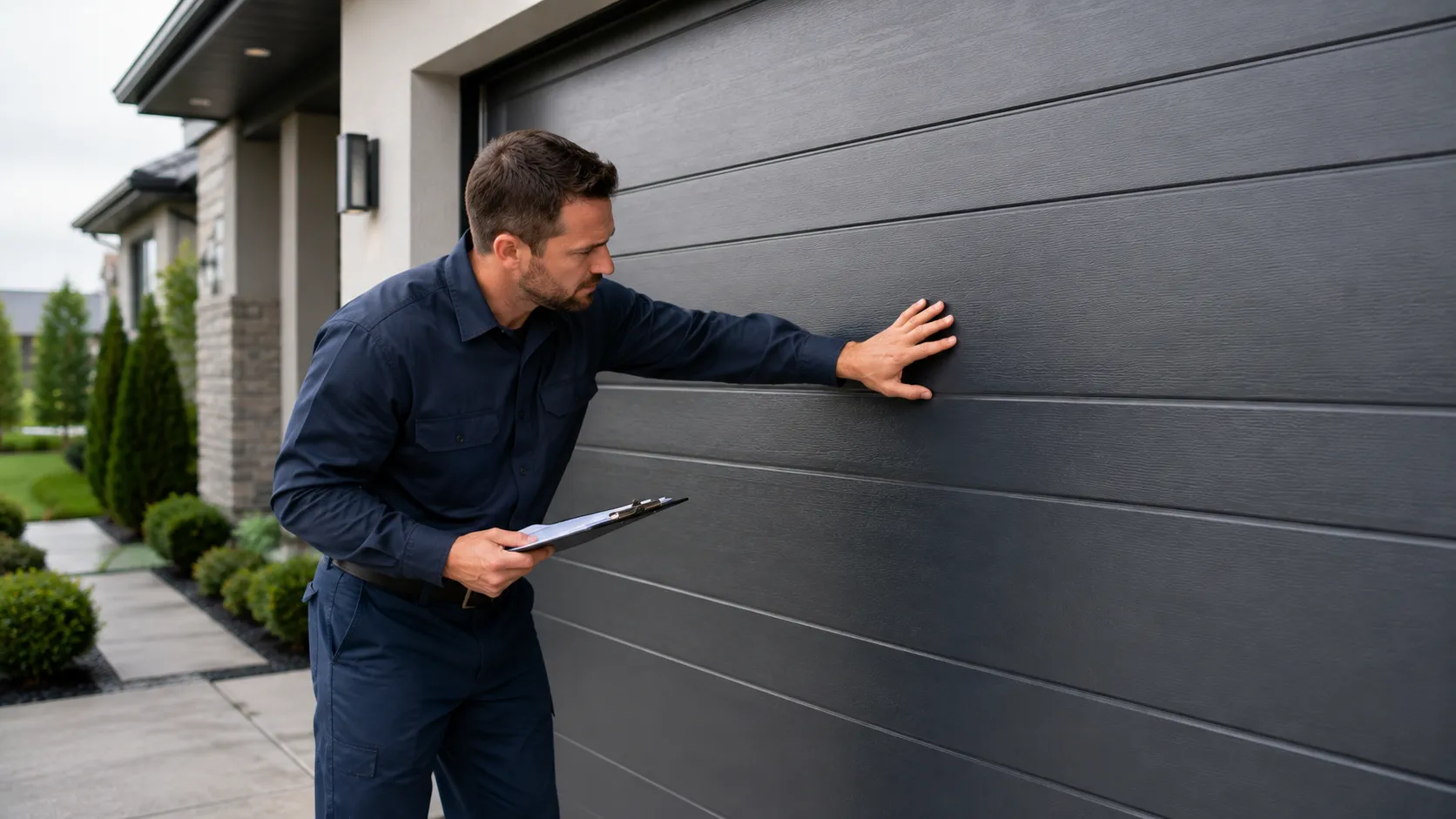
What Happens When You Call
-
1
Call or Request a Quote
Tell us what the door is doing and roughly how old the house is - that alone points us toward the likely part before a truck leaves.
-
2
On-Site Diagnosis
A tech checks the spring, cables, tracks, and opener in person and tells you plainly what is actually wrong.
-
3
Straight Price, No Surprises
You get a number before any work starts. It covers parts and labor, nothing added after the fact.
-
4
Fixed the Same Visit
Most repairs are done in one trip. If a part needs sourcing, we tell you that upfront instead of guessing.
What You Pay
We don't have a Franklin Park-specific price list to hand you here - that lives on the opener repair page for the area we're based out of, and it holds for this town too since we're driving the same truck the same 6 miles either way. What does change the number is the door behind the opener. A lot of Franklin Park garages still run the original chain-drive unit that came with a house built around 1956, and those motors were sized for lighter, single-layer doors than what people hang today.
If a homeowner has already swapped in a heavier insulated door without upgrading the opener, we're not just fixing a switch - we're often replacing a motor that's been straining for years. That's a different bill than a sensor alignment, and we won't quote one over the phone without seeing the unit.
What we can tell you plainly: don't let anyone quote you sight-unseen for "opener repair" as if every job is the same. A gear-and-sprocket kit on an old chain-drive costs a fraction of a new logic board, and the only way to know which one you need is to have someone look at the actual motor housing and listen to it run.
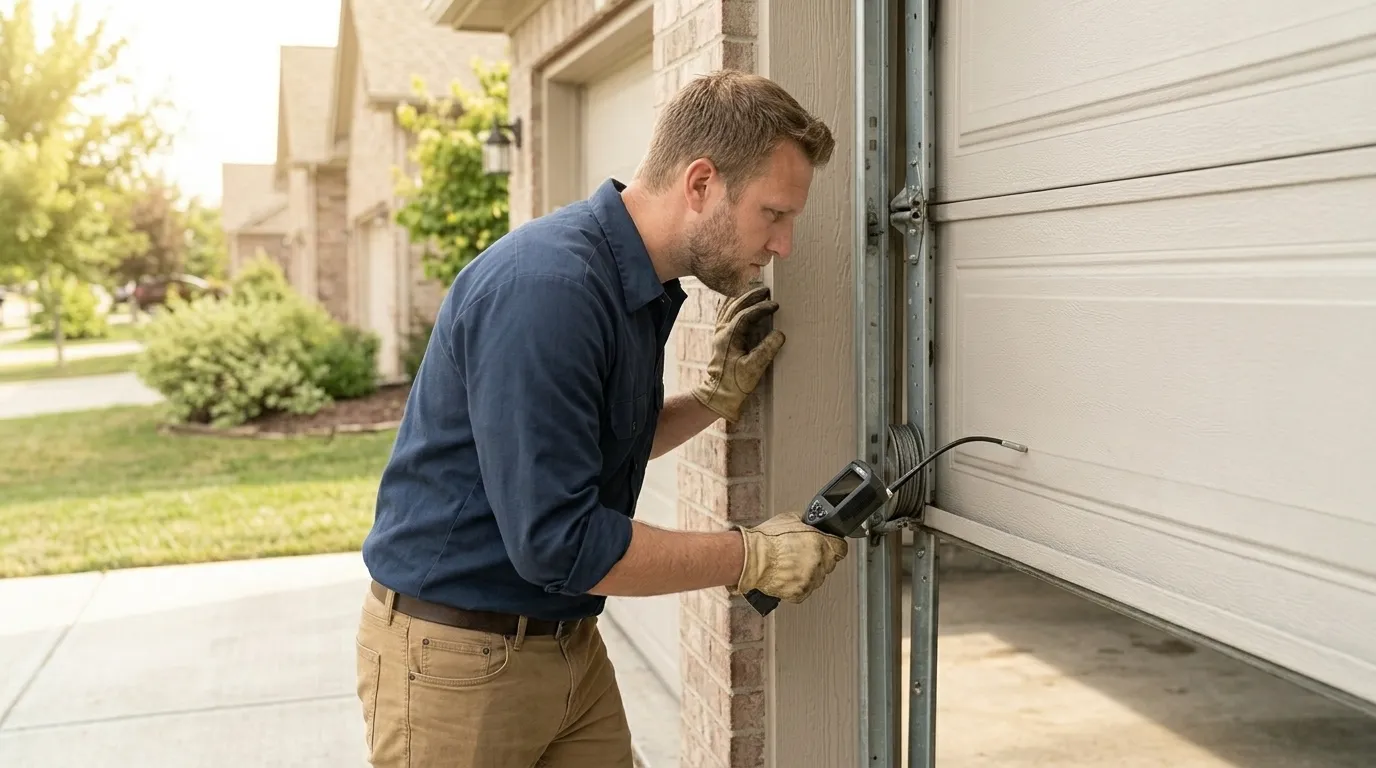
What the Repair Takes
Most of the opener calls we get from this side of the service area involve units that are original or close to it - houses here went up mostly in the 1950s, and a fair number of those chain-drive openers are still the first one ever installed. The wear pattern is predictable: a sprocket that's worn oval-shaped instead of round, a chain that's stretched enough to skip, or a capacitor in the motor that's given up in cold weather. This area sits in a cold-moderate climate band, and openers that sit unheated in a garage for six decades of winters take that toll on the start capacitor and the limit switches before anything else fails.
A straightforward gear or capacitor swap is usually a same-visit fix once we're on-site - we bring the common parts. What takes longer is when the motor housing itself has cracked or the logic board on a newer retrofit unit has fried; those sometimes need a part ordered in, and we'll tell you that up front rather than promise a same-day fix we can't back.
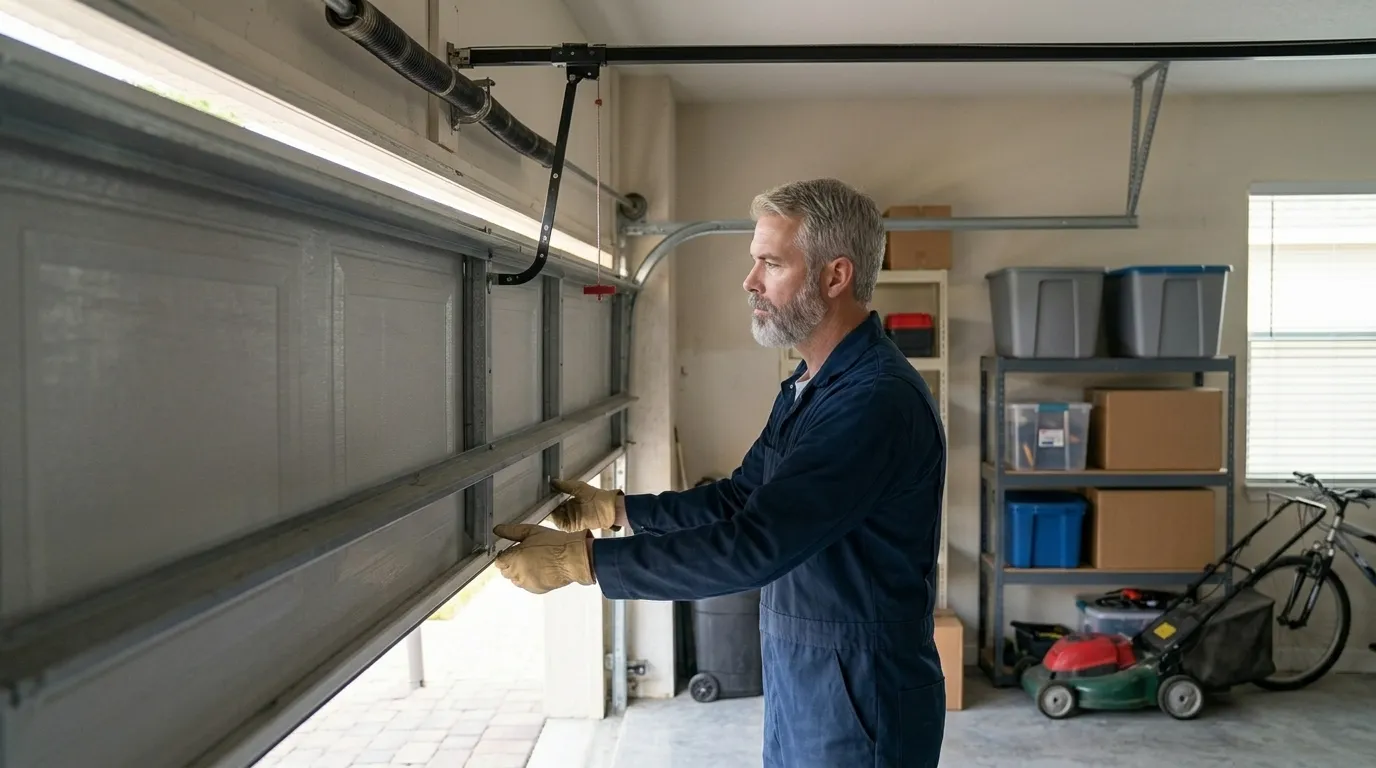
Doing It Yourself
There's a real DIY tier here and it's worth being honest about it. Tightening a loose chain, replacing the light bulb, or reprogramming a remote - those are homeowner jobs, and we'd rather you save the service call.
Where people get hurt, literally, is going further: pulling the motor housing apart on a unit that's still under spring tension, or trying to adjust the travel limits on an opener wired to a door with a broken or fatigued spring. On a lot of these older Franklin Park garages, the door and the opener are both original, which means the spring has had just as many winters to weaken as the motor has.
If the door drops fast, reverses for no reason, or the opener strains and reverses before it fully closes, that's not a settings problem - that's the door telling you the spring is compensating for something, and no amount of opener adjustment fixes a spring.
The Symptom
The most common thing we hear from this area is "it opens but won't close" or "it closes partway and goes back up." On a 1956-era garage, that's almost always the safety sensors - either they've drifted out of alignment over the decades of the door frame settling, or a retrofit sensor pair from a later opener install was never quite squared to the original frame. Sometimes it's simpler: a spiderweb or a shift in afternoon sun throwing a shadow across the sensor eye.
The other common call is grinding or a loud pop followed by nothing - that's usually the sprocket or the drive gear inside the motor housing, worn from decades of the same chain drive that's stood in most of these garages since the house was built. Neither of these is unique to opener age alone; it's the combination of an old motor and a door that was never upgraded alongside it.
Full write-up of the general service we run out of Oak Park is here: /garage-door-opener-repair-oak-park-il. For Franklin Park scheduling specifically, see /franklin-park/garage-door-service/.
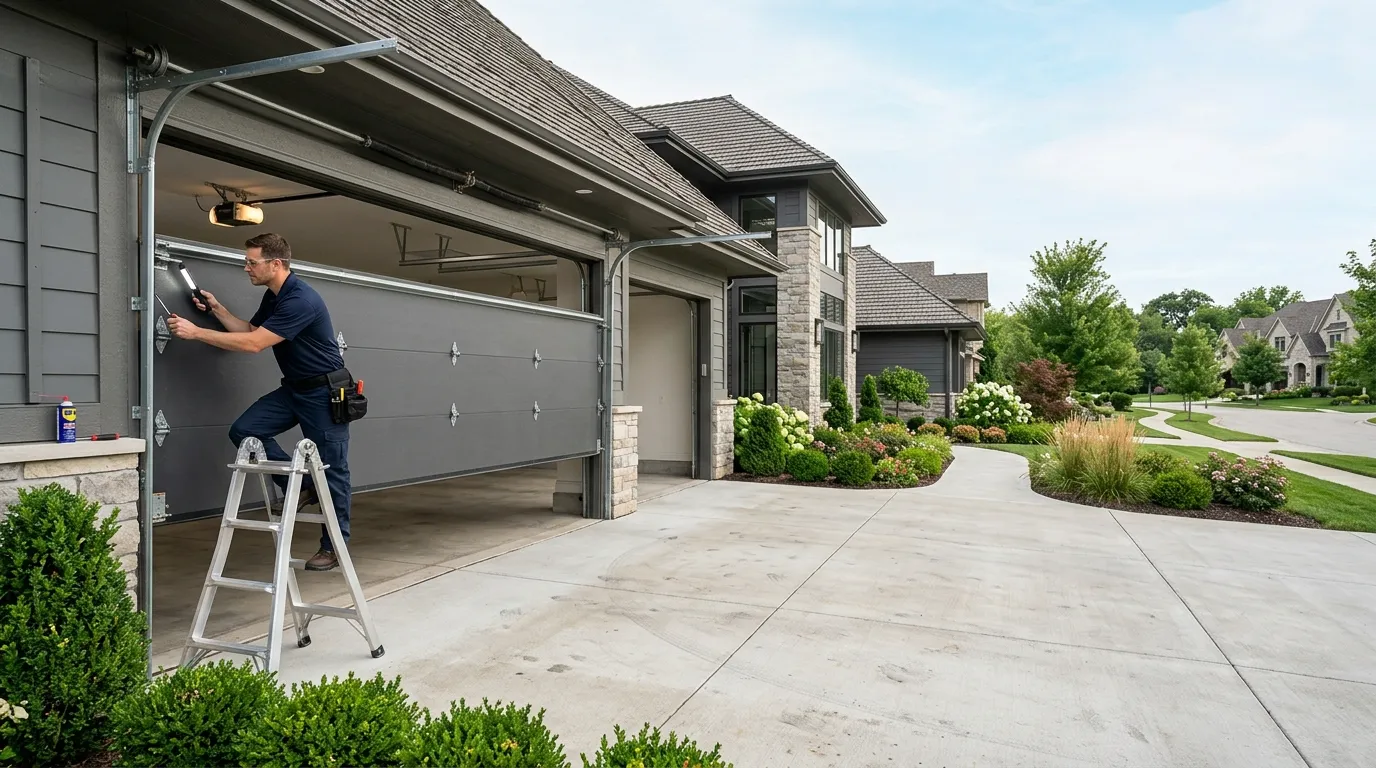
Talk to a Franklin Park Technician First
Describe what the door is doing and get a straight answer on what it likely needs.
Other Garage Door Services in Franklin Park
Recent Work in Franklin Park
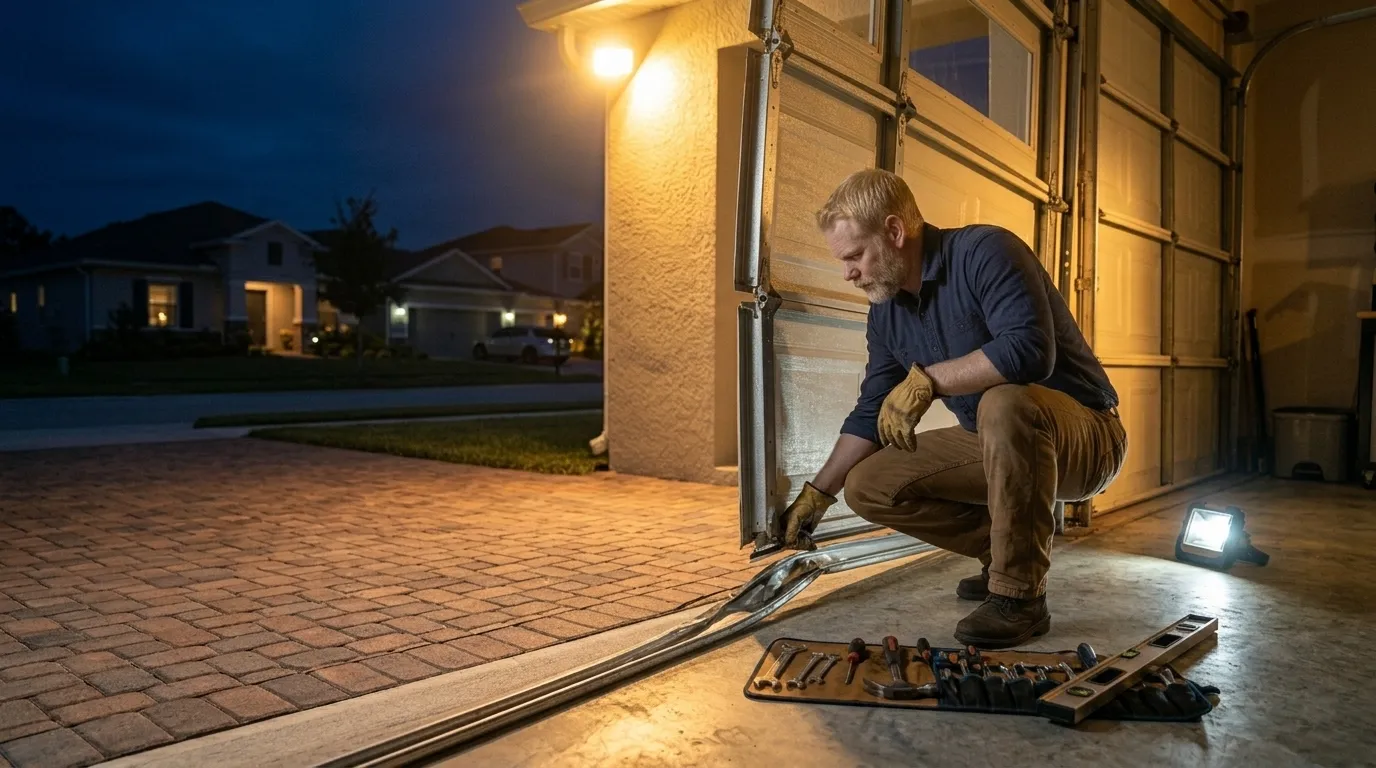
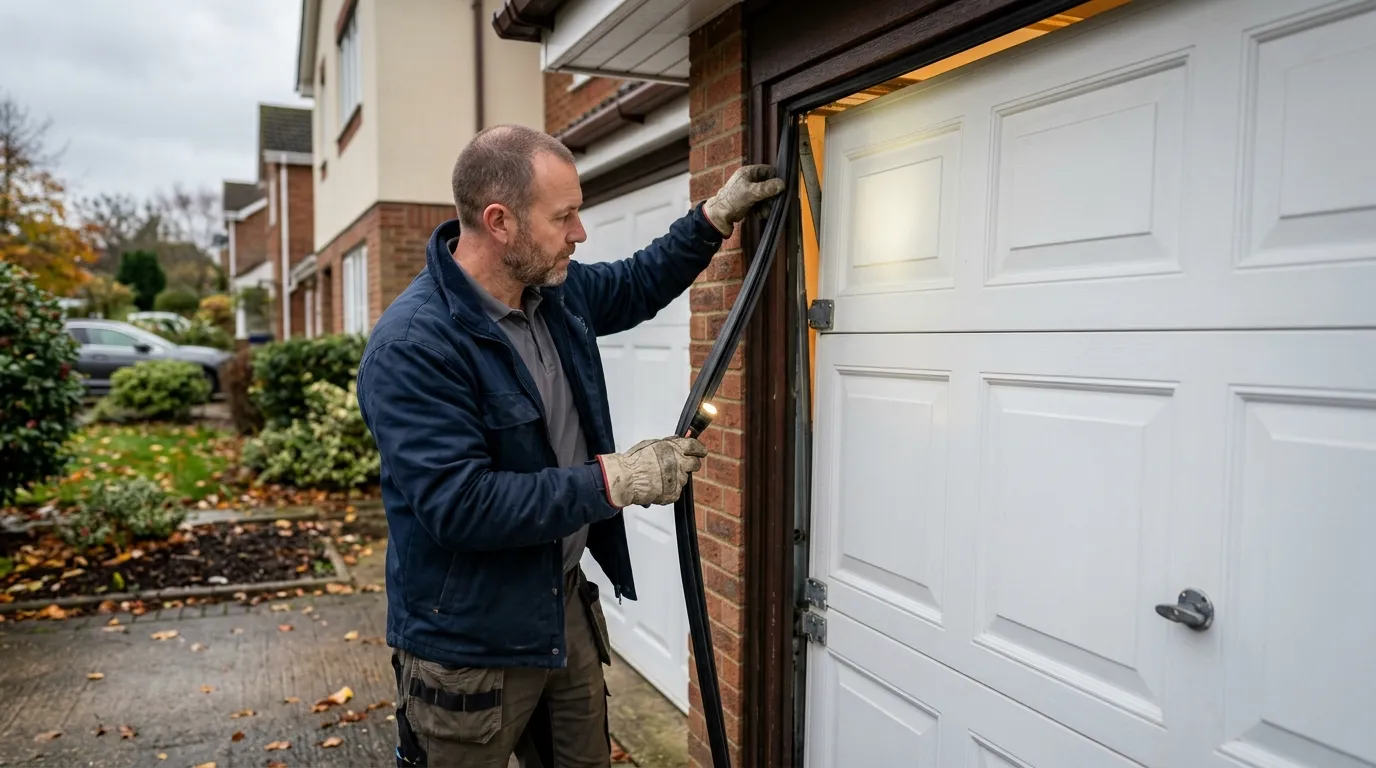
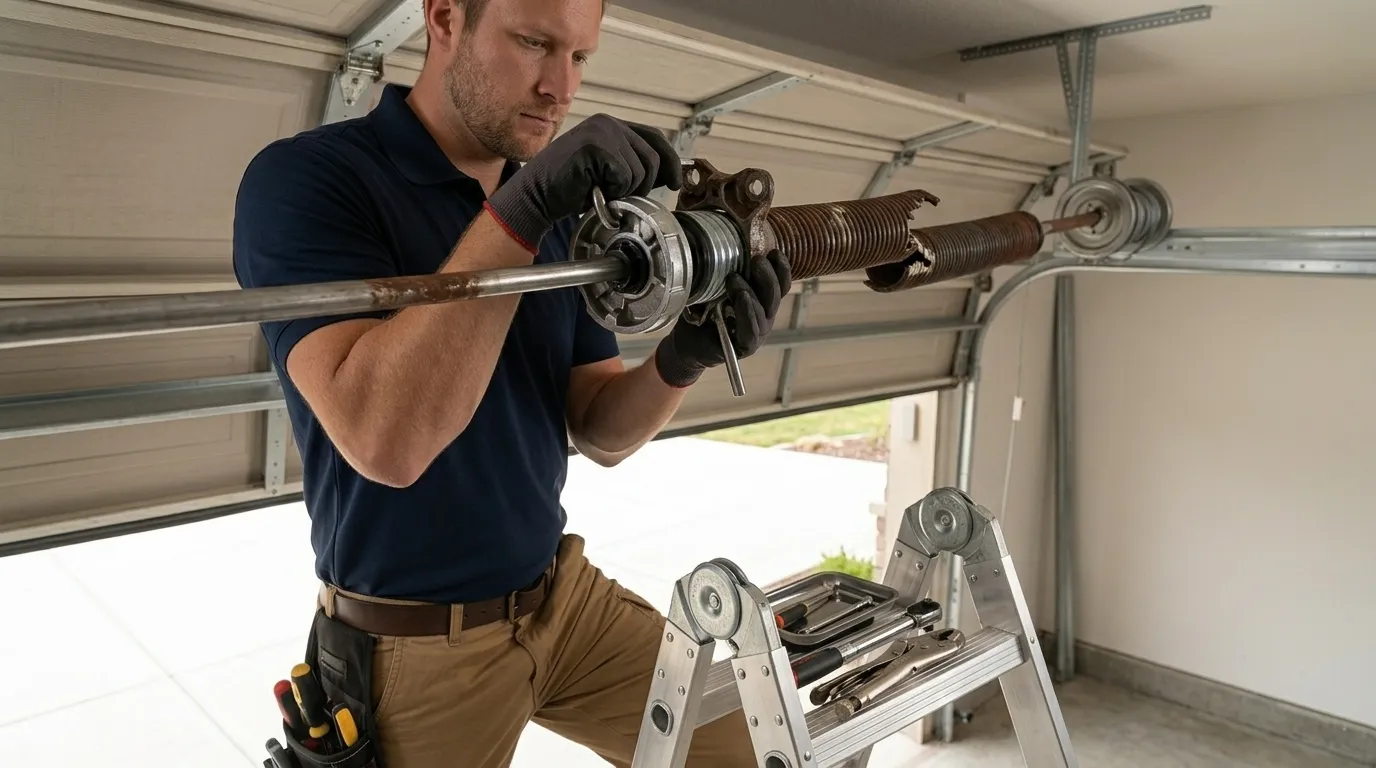
A look at jobs our crew has been on nearby.
Why Franklin Park Calls Us
Frequently Asked Questions
Why does my opener strain more in winter?
This area sits in a cold-moderate climate band, and start capacitors and limit switches on older motors lose strength faster in unheated garages through repeated winters. A motor that struggles to start on a cold morning but runs fine by afternoon is usually telling you the capacitor is near the end, not that the whole unit is dying.
Is my opener original to the house?
Possibly. Franklin Park's housing here dates mostly to the 1950s, with a median build year around 1956, and plenty of garages never had the opener swapped even if the door itself was replaced later. If you've never had it serviced, that's worth checking before assuming a fault is new.
Do you have a shop in Franklin Park?
No. We're based in Oak Park and drive out to Franklin Park, about 6 miles away, for calls. There's no local branch here, just the same truck and the same parts stock we run everywhere in the service area.
Can I just replace the sensors myself?
You can, and it's one of the lower-risk DIY jobs on an opener. Where it gets tricky is squaring a new sensor pair to a frame that's shifted slightly over decades - on older houses that's more common than people expect, and a slightly off angle will keep tripping the safety reverse.
Need Opener Repair in Franklin Park?
Call now for straight answers on cost and timing.