
Service
Garage Door Repair for Oak Park's 1938-1994 Housing Stock
Broken spring, stuck opener, or snapped cable? Oak Park Garage Door Pros repairs doors from the town's 1938-1994 housing stock, built for a colder climate.
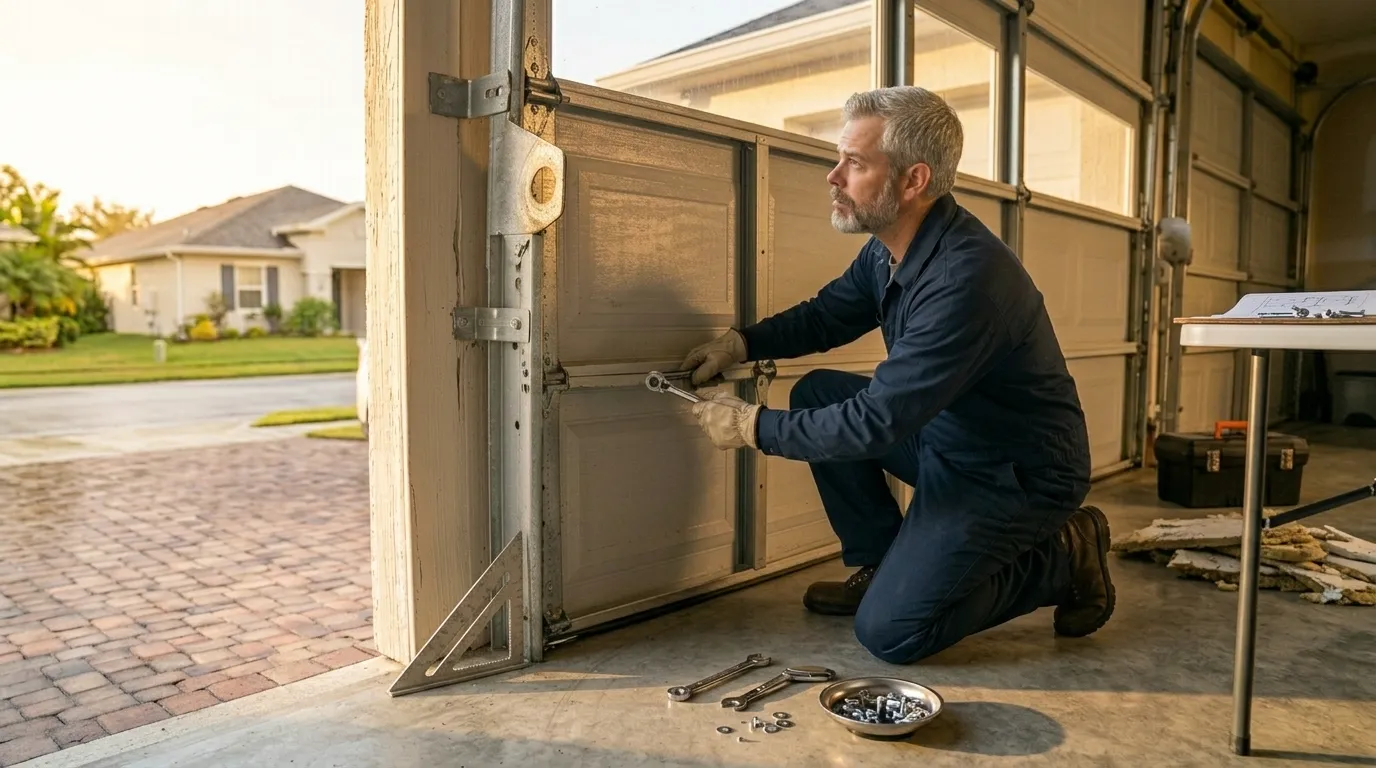
What Happens When You Call
-
1
Call or Request a Quote
Tell us what the door is doing and roughly how old the house is - that alone points us toward the likely part before a truck leaves.
-
2
On-Site Diagnosis
A tech checks the spring, cables, tracks, and opener in person and tells you plainly what is actually wrong.
-
3
Straight Price, No Surprises
You get a number before any work starts. It covers parts and labor, nothing added after the fact.
-
4
Fixed the Same Visit
Most repairs are done in one trip. If a part needs sourcing, we tell you that upfront instead of guessing.
What You Pay
We can't give you a number over the phone that means anything, and we won't pretend to. What a repair costs here depends on what's actually failed and how old the setup is.
A snapped torsion spring on a door installed in the last decade is a straightforward swap. A spring on a door that's been on the house since the 1960s or 70s - which describes a lot of Oak Park garages, given how much of the town's housing dates from that stretch - sometimes means the drum, the shaft, or the end bearing plate has to come out too, because the original parts aren't made to fit anything currently on a supplier's shelf.
Openers are similar. A chain-drive unit from the 80s that finally quits doesn't always have a matching replacement part, so you're often looking at a new opener rather than a fix. We tell you this on-site, after we've actually looked at the spring gauge, the drum size, and the track condition - not before.
If a repair is going to cost close to what a new door would run, we'll say so. That's the honest version of an estimate, and it's the only one we give.
Why It Happens Here
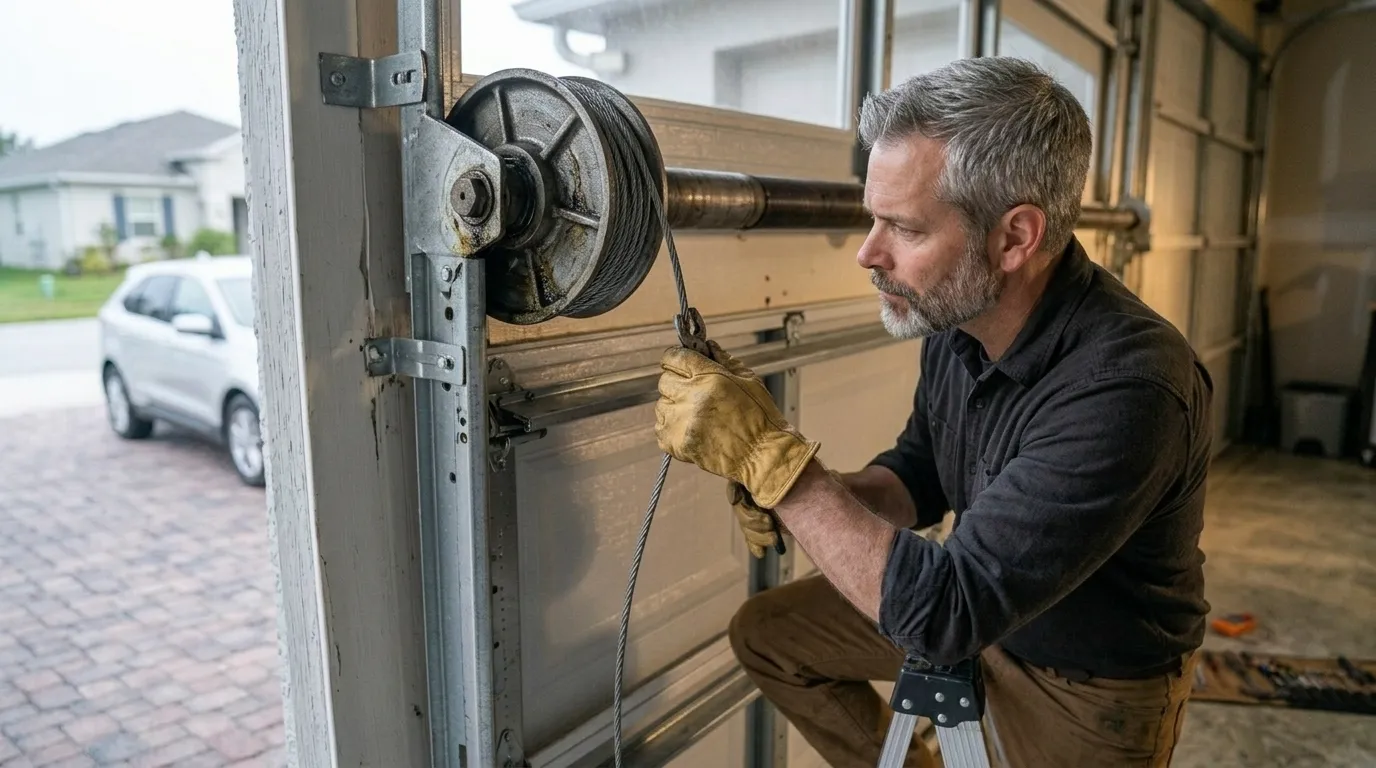
Oak Park's housing runs from 1938 to 1994, with the median build year sitting around 1965. That matters for garage doors because a door and its hardware installed during that stretch was engineered for steel, spring tension standards, and opener technology from that era - not for the fifty-plus years of freeze-thaw cycles it's since been through.
A torsion spring wound in 1965 has done a lot more open-close cycles than one installed ten years ago, and metal fatigue doesn't announce itself. It just lets go.
The cold-moderate climate band this area sits in adds to it. Steel contracts in winter, and a spring that's already fatigued from decades of cycling is the one most likely to snap on a fifteen-degree morning rather than a mild one in July. Torsion bars, cables, and rollers all stiffen up the same way.
So you get a predictable pattern: doors that worked fine in October start sticking, groaning, or failing outright once the temperature drops and stays down. It's not bad luck. It's 1960s hardware meeting a cold winter, year after year.
The Complications
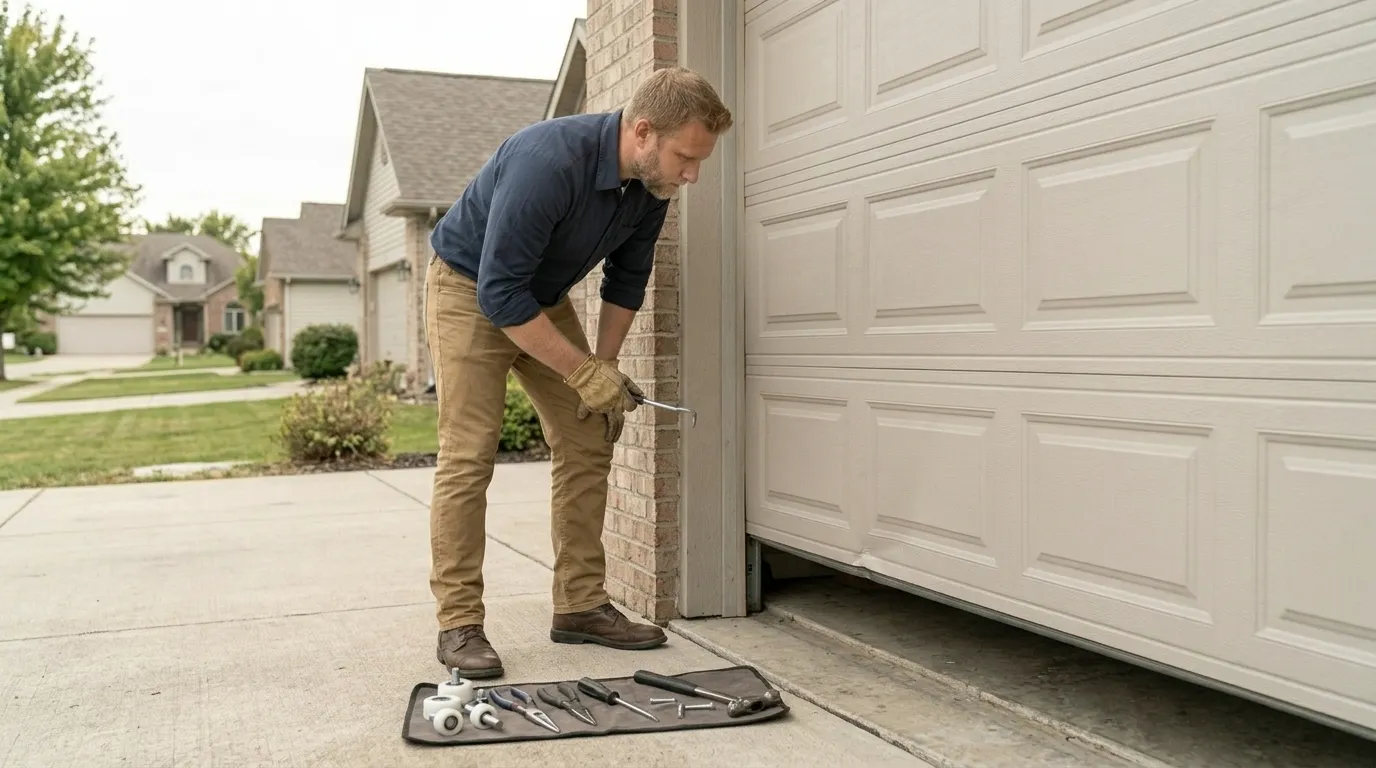
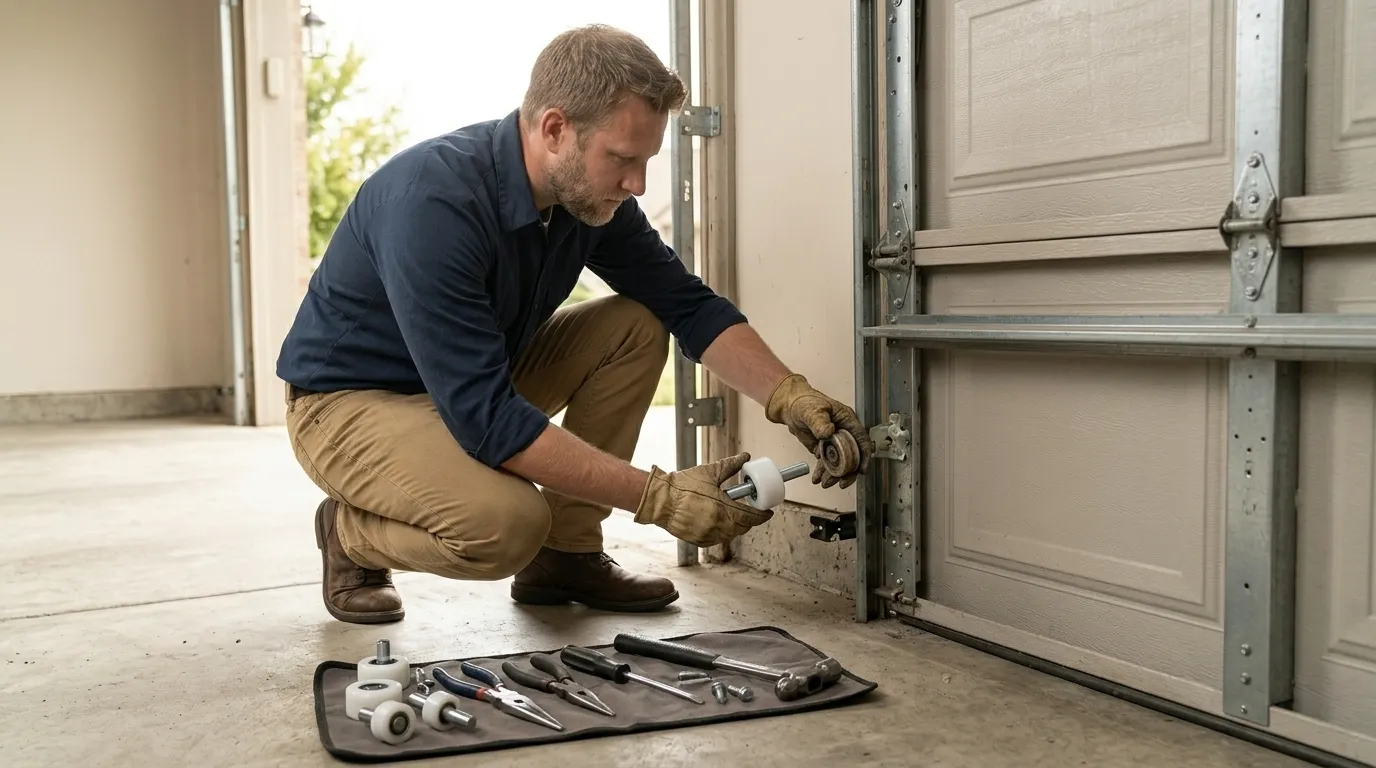
The complication with older Oak Park doors isn't usually the repair itself - it's finding the part. A lot of this area's garages, part of a broader stretch of roughly eighty-five named areas across the service region that share mostly 1960s-70s construction, still run side-mounted torsion hardware or original extension spring setups that current manufacturers don't stock anymore. When a bracket or a specific spring size doesn't exist as a direct replacement, the job becomes a retrofit: adapting current hardware to fit a frame and track spacing that was never designed for it.
That takes more time on-site than a straight swap, and it's the reason two houses with what looks like the same broken spring can end up as two very different jobs. Panel damage adds another layer - original one-piece and early sectional doors sometimes used gauge steel or panel dimensions that aren't produced anymore, so a single dented panel can mean replacing the whole door rather than one section. We'll always tell you when we hit that wall rather than forcing a part that doesn't belong.
The Symptom
The most common call we get starts the same way: the door was fine yesterday, and this morning it either won't move, moved halfway and stopped, or came down with a bang loud enough to bring someone outside. That bang is almost always a torsion spring letting go - usually on a cold morning, because a spring already worn from decades of cycling loses the last of its tension exactly when steel is stiffest.
A slower version of the same problem is a door that opens but sags on one side, or an opener that strains and reverses partway up. That's often a cable starting to fray off a worn drum, or a roller that's seized in its track after years without lubrication in a garage that never gets much heat.
Neither of these gets better on its own, and running the opener repeatedly against a bound spring or a fraying cable is how a $200 fix turns into a full door replacement. If your door is doing any of this, it's worth a look before the next cold snap, not after.
Talk to a Technician Before You Book
Describe what the door is doing and get a straight answer on what it likely needs.
Other Ways We Can Help
Jobs Like Yours
Recent work from this service line.
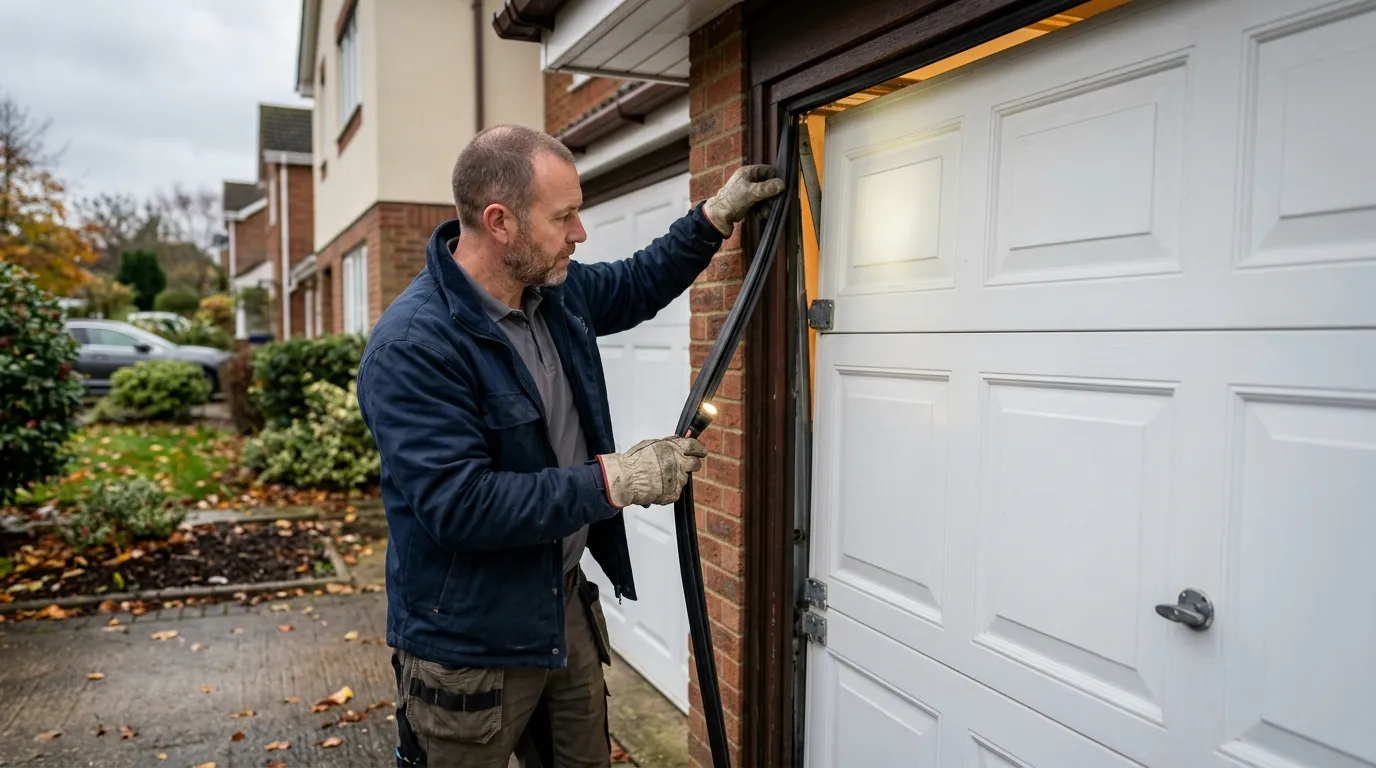
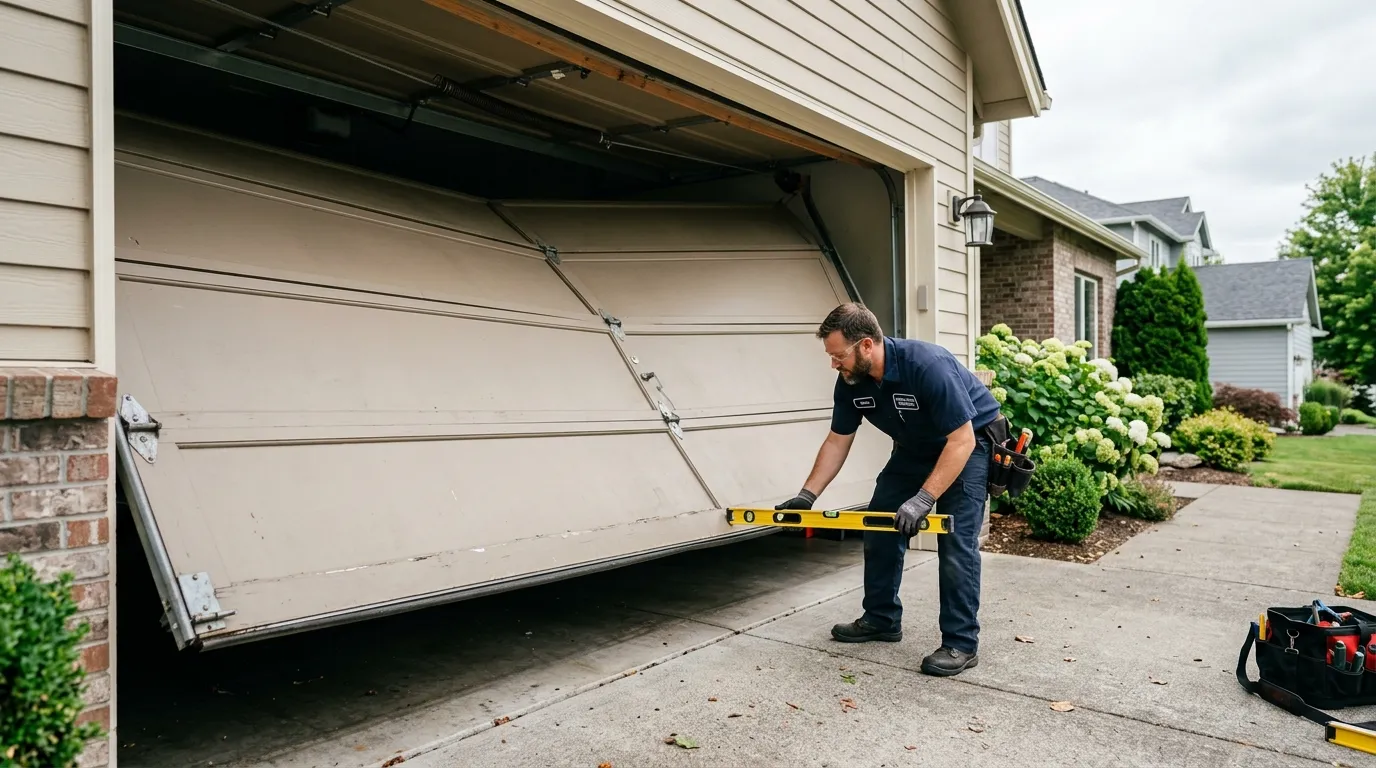
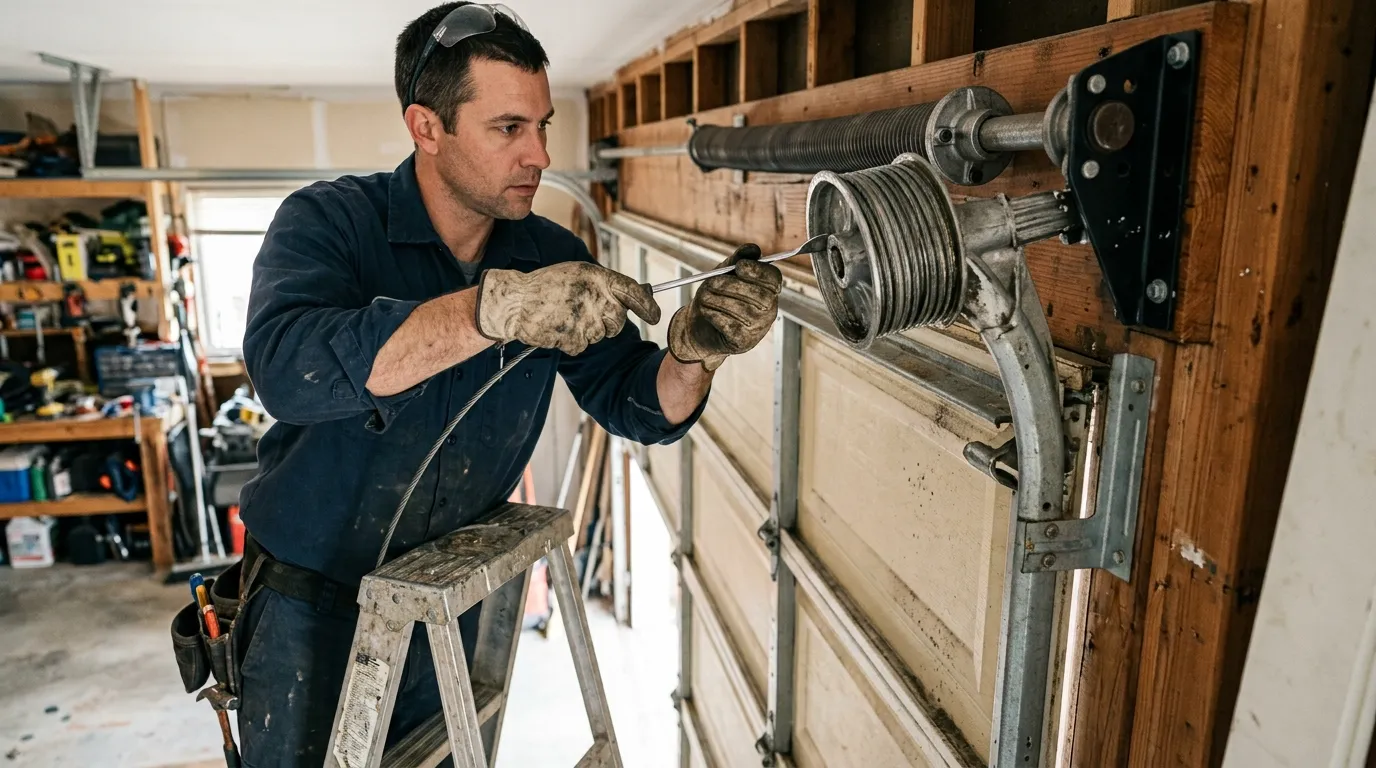
Why Oak Park Calls Us
Frequently Asked Questions
Why did my garage door spring snap on such a cold morning?
Torsion springs lose tension over years of cycling, and cold steel is stiffer and more brittle than warm steel. In Oak Park's cold-moderate climate, a spring that's already fatigued from age is far more likely to fail on a frigid morning than a mild one, which is why we see a spike in spring calls once temperatures drop and stay down.
My house was built in the 1960s. Will parts for my door still be available?
Sometimes, sometimes not. A lot of Oak Park's housing dates to that era, and original torsion hardware or panel dimensions from then aren't always made anymore. We check the actual bracket, spring size, and panel spec on-site before we know whether it's a direct swap or a retrofit.
Do you give a firm price before you see the door?
No, and we won't pretend to. Repair cost depends on the door's age, the hardware type, and whether original parts are still available. We look at the spring, drum, and track in person, then tell you the real number and any options, including when replacement makes more sense than repair.
Need Garage Door Repair for Oak Park's 1938-1994 Housing Stock?
Call now for straight answers on cost and timing.