
Oak Park Garage Door Guide
Why Oak Park Garage Doors Let the Cold In
Oak Park homes built mostly between 1938 and 1965 lose heat through garage door seals in cold winters. Here's what's failing, why, and what a fix costs.
When It Stops Being a DIY Job
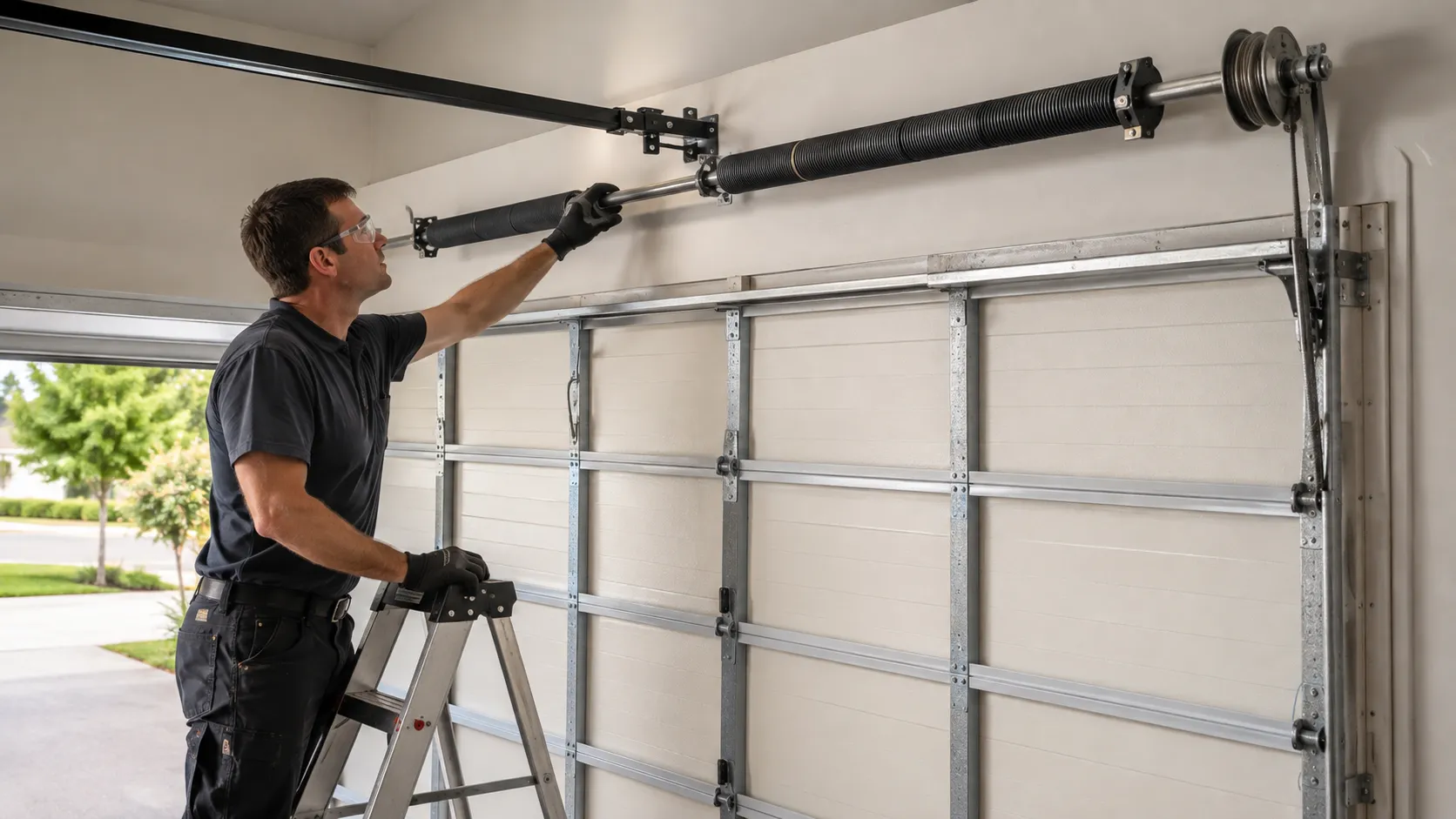
A tube of caulk and a new bottom seal from the hardware store fixes a lot of small gaps. That's a real DIY job and we won't pretend otherwise. Where it stops being one is when the gap isn't at the bottom anymore - it's along the sides or top, where the door meets a frame that's shifted over sixty-plus years of settling.
A lot of Oak Park houses were built between 1938 and 1965, and the garage openings from that era were framed to a standard that predates the flexible vinyl seals sold today. If your side seals won't sit flush no matter how you trim or press them, the track or the framing itself has moved out of square. That's not a seal problem anymore - it's an alignment problem, and pressing a new strip against a warped frame just wastes the strip.
We'll say plainly: if you've replaced the bottom seal twice in two winters and you're still getting a cold line under the door, stop buying seals. Call and let someone check the track and the slab pitch before you spend a third round on rubber that was never going to solve it.
What Is Going On
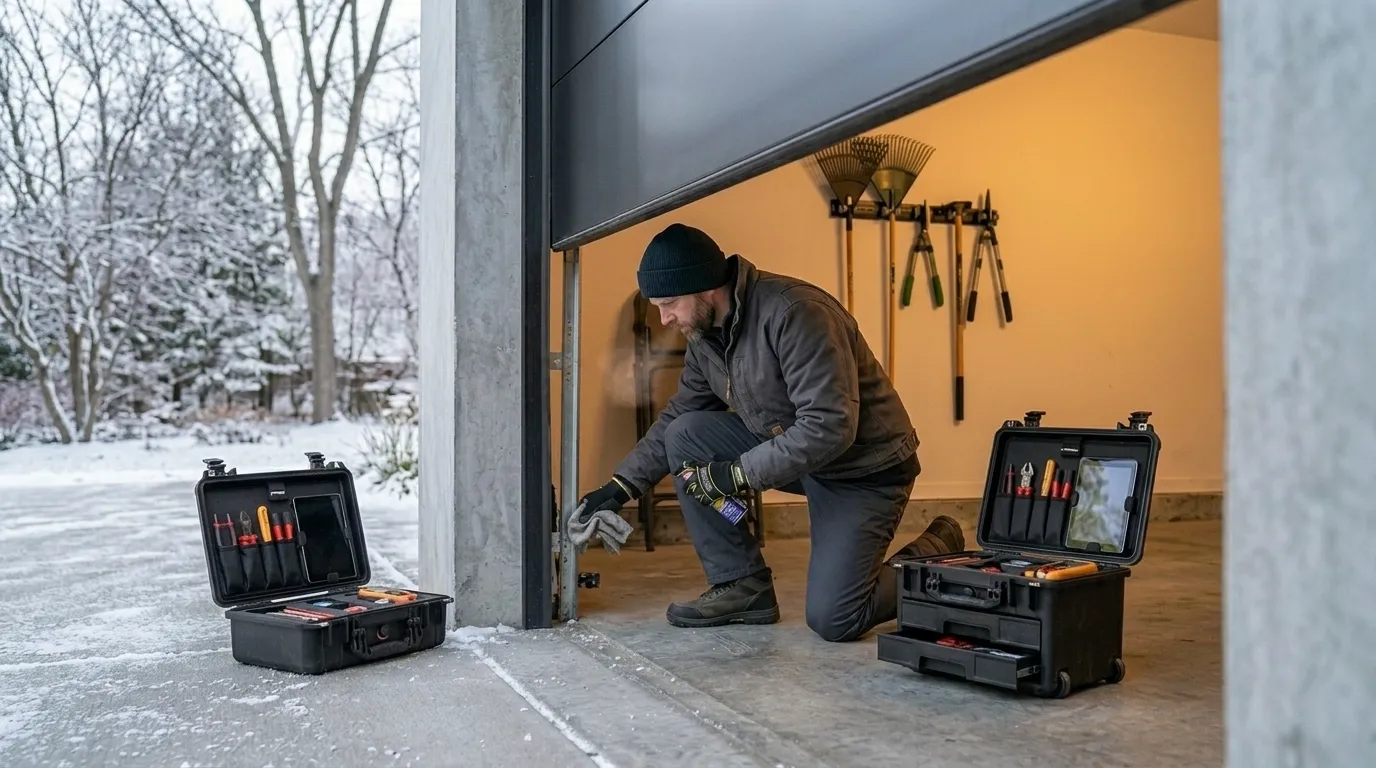
Across Oak Park and the surrounding blocks, the housing stock runs mostly 1960s and 70s construction, with the broader area's homes dating back as far as 1938. Garage doors from that build era, or replacement doors sized to fit those original rough openings, were rarely installed with the astragal and side-seal systems that are standard in new construction today.
What happens over decades is straightforward: the wood jamb the seal presses against dries and shrinks a little every winter, the door panel itself can sag slightly on its hinges, and the seal channel that held a snug seal in 1975 is now a hair too wide for it. None of that is damage exactly - it's just what sixty years of temperature swings do to wood and steel that were never designed to be airtight forever.
The result is the draught you feel standing next to the door on a January morning: not one big gap, but several small ones - top corners, one side more than the other, sometimes under the center strut where the panel has a slight bow. Each one is small. Together they're why the garage is ten degrees colder than it should be and why frost forms on the inside of the door itself.
What Local Conditions Do
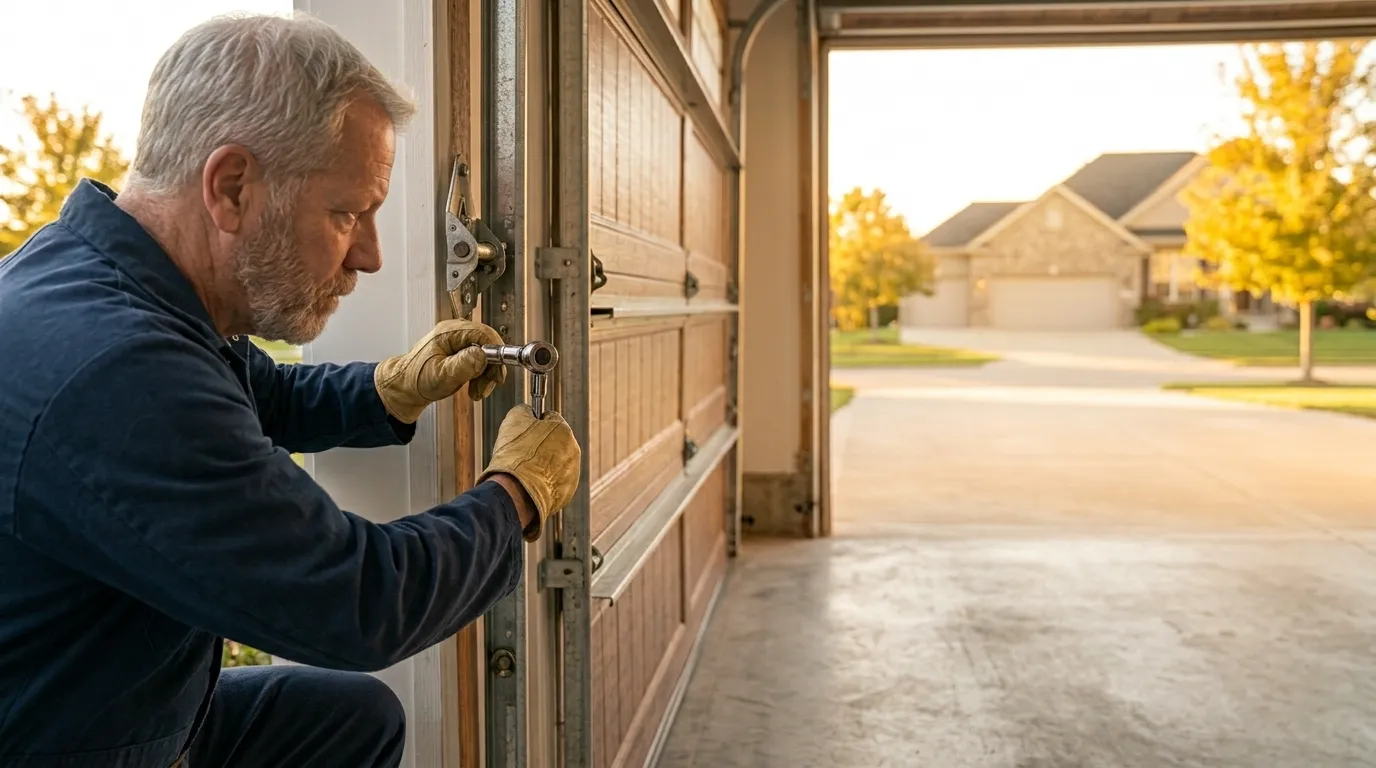
Oak Park sits in a moderate-cold climate band, which means the seals on your door go through a real freeze-thaw cycle most winters rather than a steady deep freeze. That's actually harder on rubber and vinyl than constant cold would be. Repeated cycles of the seal stiffening overnight and softening in afternoon sun cause it to crack at the fold line faster than a seal in a milder or a consistently frigid climate would.
On older doors - the ones going back to that 1938 to 1965 building period - the steel panels themselves also contract in cold enough to pull slightly away from a seal that fit fine in August. You'll notice it most on the first hard cold snap of the season, when a door that sealed fine in October suddenly whistles at 15 degrees.
We're not going to tell you to expect ice damming or anything dramatic - that's not what this band produces. What it produces is steady, moderate cycling that ages weatherstripping faster than the seal's stated lifespan suggests, and it's why a seal that looks fine in July can be failing by February.
What You Pay
We don't have a set number to quote you here without seeing the door, and pricing a seal job over the phone from a template would be a guess dressed up as an estimate. What we can tell you is what drives the cost up or down.
A straight bottom-seal swap on a standard door is the cheapest thing we do. Side and top seals cost more mainly in labor, because getting the channel clean and the new strip seated straight takes time, not because the material itself is expensive. If the frame has moved - which is common on the older stock in this area - you're paying for an adjustment to the track or jamb before the seal work even starts, and that's a different job entirely.
Oak Park's median household income sits at $83,975, and most of what we see people choose here is the middle option: a full weatherstrip kit rather than a piecemeal bottom-only fix, done once properly instead of twice cheaply. We won't push you toward replacing the whole door over a draught - that's rarely the right call unless the panel itself is bowed or rusted through.
How We Can Help
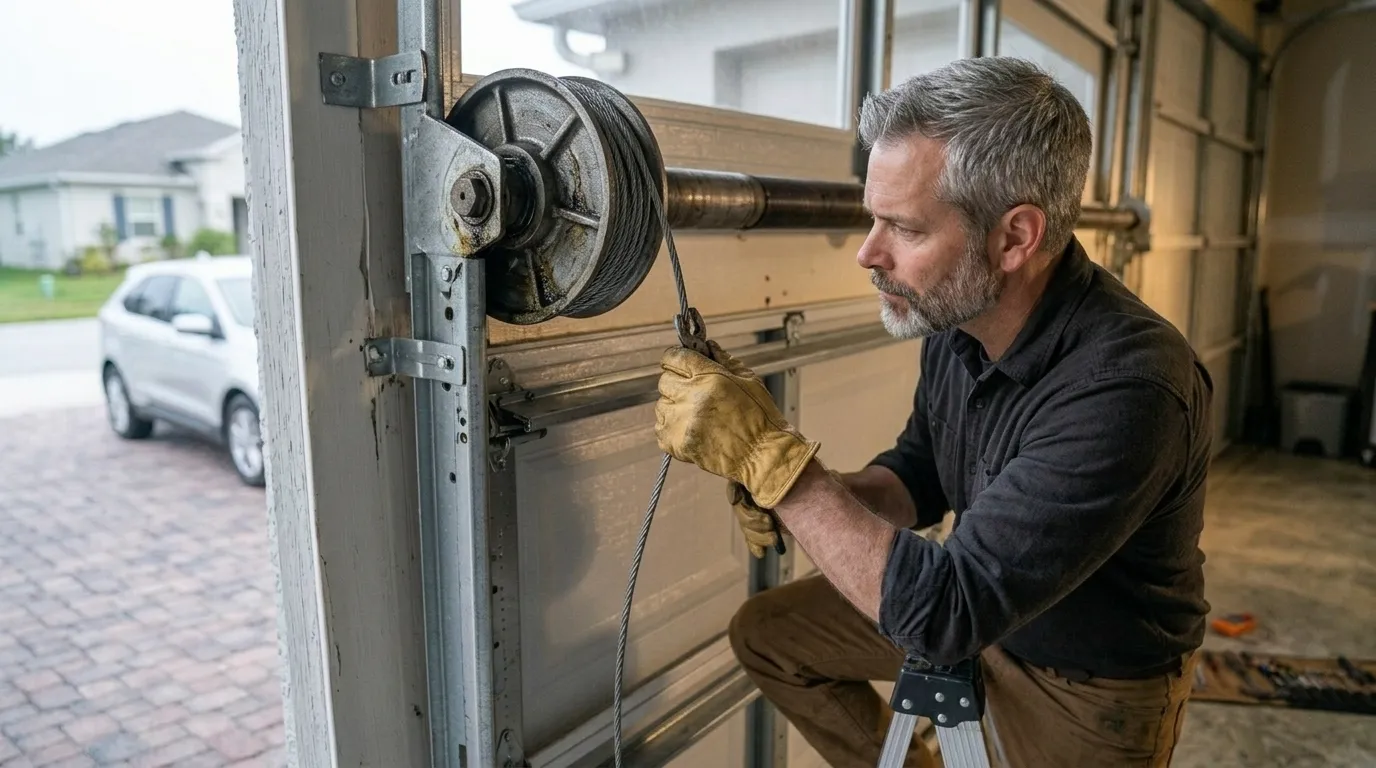
Garage Door Repair
Springs, cables, tracks, rollers, and openers fixed by a tech who explains the problem before touching anything.
Learn more →
Garage Door Installation
New sectional doors sized and installed for the housing stock actually built in this area.
Learn more →
Garage Door Service
Tune-ups, lubrication, and safety checks that catch a small problem before it becomes a service call.
Learn more →Frequently Asked Questions
Can I just add more caulk around the door frame instead of replacing seals?
Caulk helps seal the frame to the wall, but it does nothing for the gap between the door panel and the frame itself, which is where most cold air comes in. If the draught is at the seam where the door meets the jamb, caulk on the outside won't reach it - you need the seal strip itself replaced or adjusted.
Why does my garage door only draught in winter and not summer?
Steel panels and the wood or vinyl seal against them expand and contract at different rates. In Oak Park's moderate-cold winters, that contraction opens small gaps that close back up once temperatures warm in spring, which is why the same door can seal fine in July and whistle in January.
Is it worth replacing the whole door just to fix draughts?
Usually not. If the panel is straight and not rusted or cracked, a seal and possibly a track adjustment solves the draught for a fraction of a full door's cost. Replacement makes sense when the panel itself is warped or damaged, not just when the seals have aged out.
Have a Door That Needs a Second Opinion?
Call and describe what it is doing - we will tell you what it likely is.