
Oak Park Garage Door Guide
Why Garage Door Springs Snap in Oak Park's Cold Snaps
Oak Park homes, mostly built between 1938 and 1994, often still run original torsion springs. Here's why cold snaps break them and what a real fix costs.
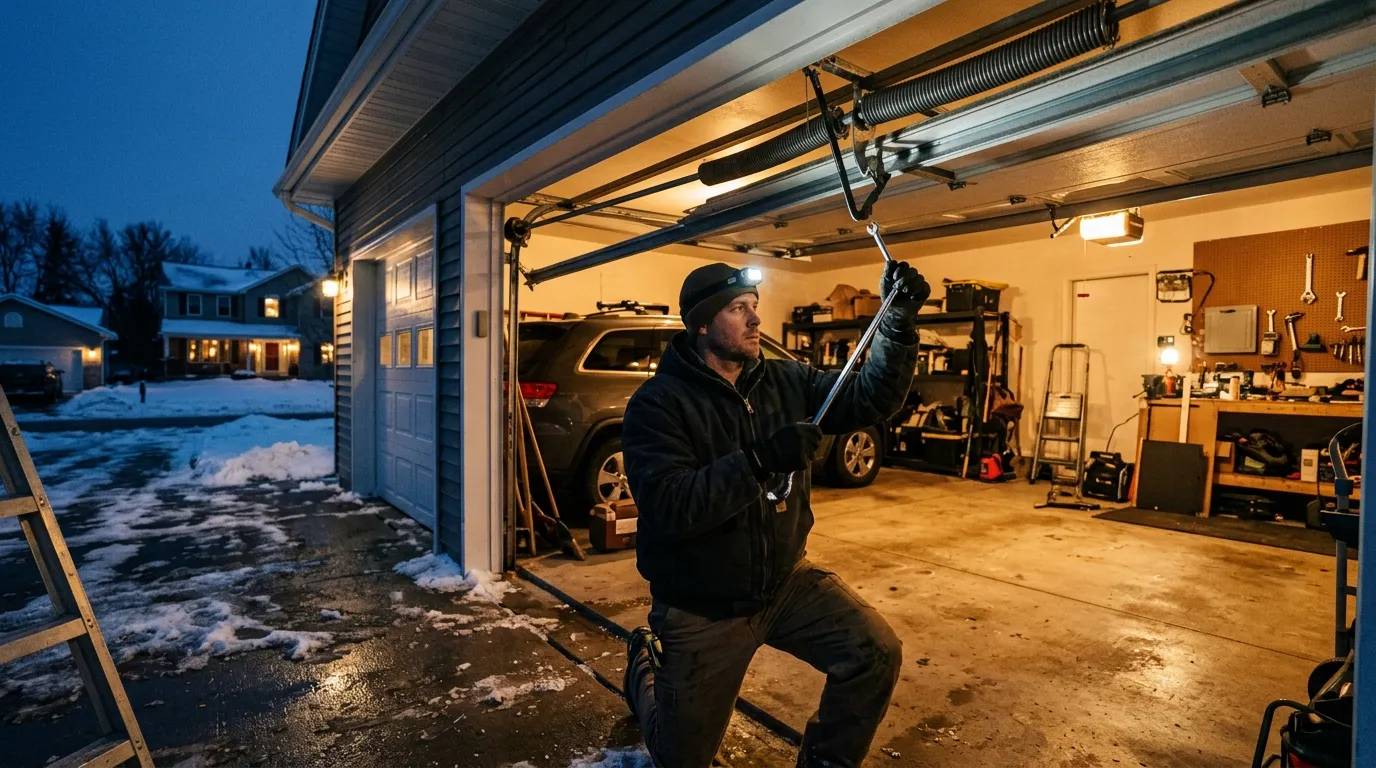
When It Stops Being a DIY Job
A torsion spring holding up a double door carries enough stored force to break a hand or drop a hundred-pound section on you if it lets go while you're working on it. That risk goes up, not down, in cold weather, because a fatigued spring under tension can snap the moment you touch the winding bar rather than giving you warning creaks first.
Oak Park's housing stock runs mostly 1938 to 1994, with a median build year of 1965, so a lot of the springs still hanging in these garages are original torsion units, sized for doors and hardware that don't match what's sold today. Winding cones on hardware that old are often undersized by current standards, and some have no safety cable running through the coil at all.
If the spring has already broken and the door is down, that's not a tune-up call - it's a job that needs the right winding bars, the right cone size for a door built decades ago, and someone who's done it before. What you can safely do yourself: lube hinges and rollers, snug loose lag bolts, and watch how the door balances when it's fully open.
What we won't do is talk you through a spring swap over the phone. Some jobs need a truck, not advice.
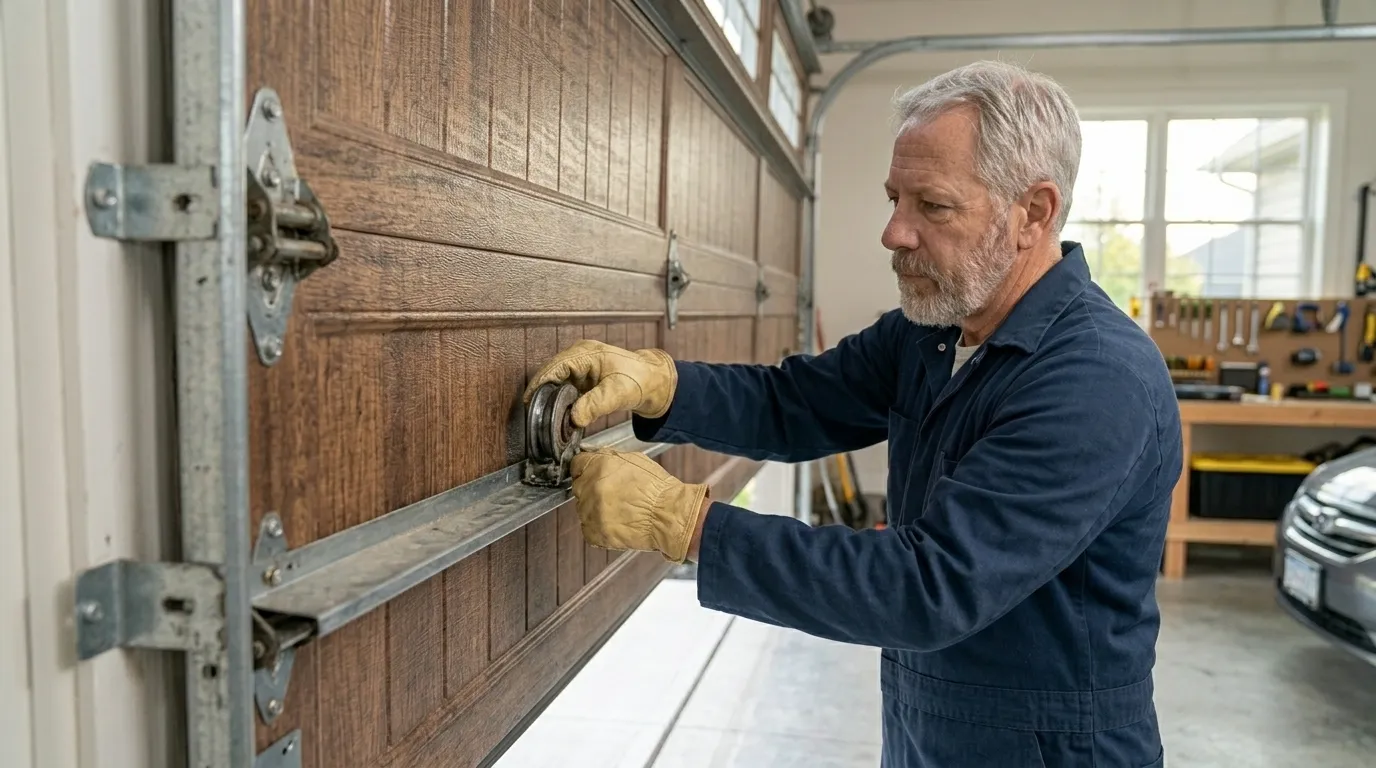
What Is Going On
Steel fatigues the same way anywhere, but a torsion spring near the end of its life doesn't fail on a mild afternoon - it fails on the coldest morning of the stretch, because cold steel is stiffer and less forgiving right at the moment a weak coil finally gives out.
Across this area the housing is mostly 1960s-70s stock, meaning a big share of the springs in these garages have been through fifty-plus winters of expansion and contraction already. A spring rated for around 10,000 cycles doesn't care what year it is; it cares how many times it's wound and released, and a door original to a 1965-built house has had a lot of those cycles.
What actually happens at the moment of failure: the coil's outer wire, already thinned by decades of flexing, reaches its breaking point right as the cold makes the whole assembly more brittle. You'll usually hear it - a bang loud enough that people think something fell in the garage.
The door will look normal until you try to lift it and it won't move, or it drops fast on the way down. Neither is something to force past.
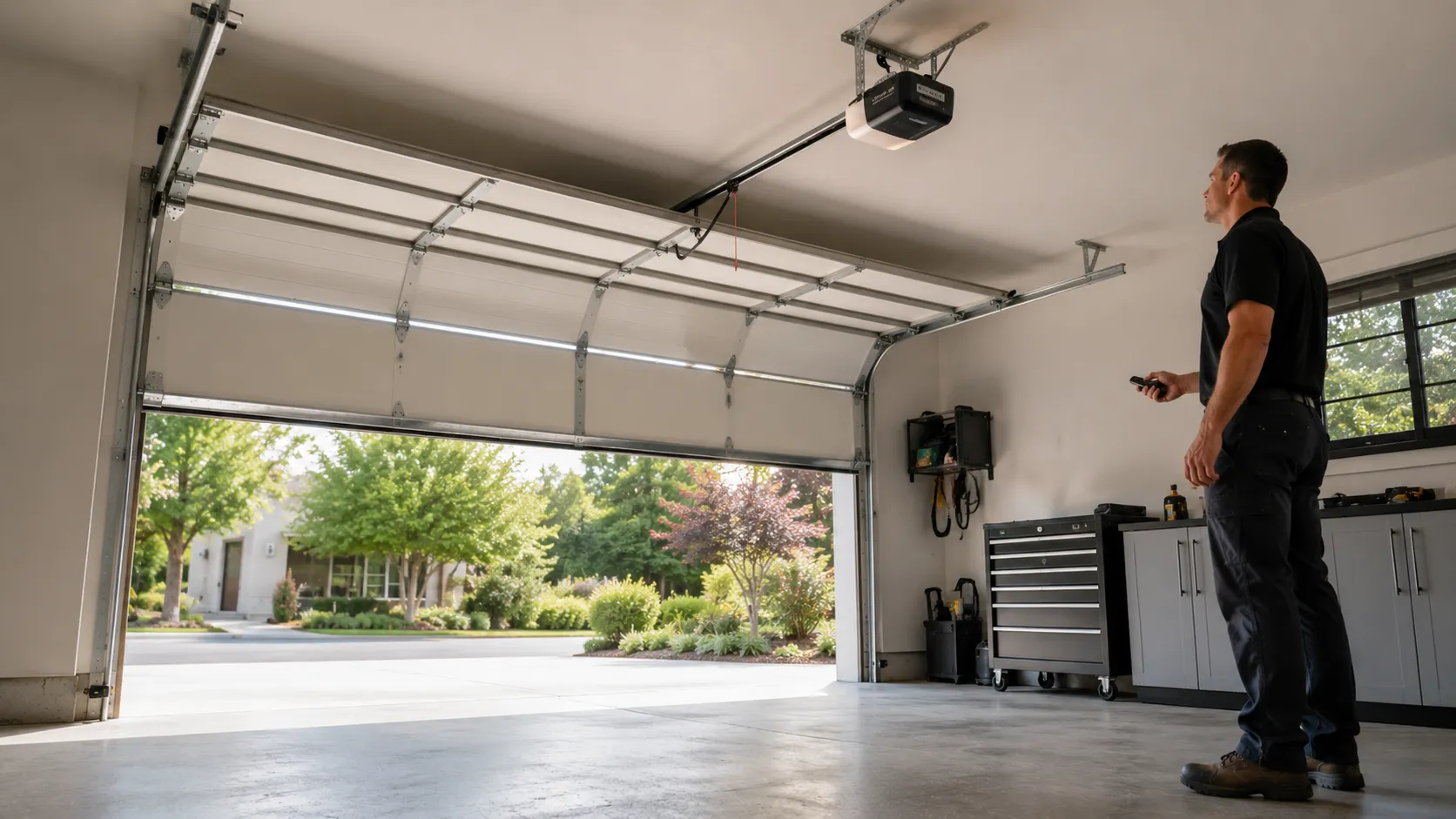
What Local Conditions Do
Oak Park sits in a cold, moderate climate band, and that matters for spring life in a specific way: it's not just cold, it's cold that swings. Repeated overnight drops and daytime warm-ups put a spring through thermal cycling on top of the mechanical cycling it already gets from daily use, and that combination is what finally snaps a coil that's been fatigued for years.
The same pattern shows up across this stretch of the near-west suburbs - River Forest, Forest Park, Elmwood Park, Berwyn, and the rest of the towns within a few miles - because the housing went up in the same postwar wave and sits in the same climate band. A spring that's marginal in October is often the one that goes in January.
One thing this doesn't mean: that every cold morning brings a wave of calls. Most springs that are going to fail in winter were already close to failing in fall. Cold weather doesn't create the problem - it exposes a spring that was already near the end of its rated cycle count, on a door that's been doing the same daily lift-and-lower since the Johnson administration.
What You Pay
We can't quote a spring replacement over the phone, because the right price depends on spring size, whether it's a single or a pair, and whether the cones and cable need replacing along with the coil - all things we check in person, not things we guess at.
What we can tell you is how homeowners here tend to decide. With a median household income of $83,975 across the service area, most people we talk to choose a full spring replacement - both springs, even if only one broke - over patching just the failed side, because a mismatched pair wears unevenly and you're often back at the same job within a year or two.
The honest limitation here: if your door is original to a house built well before 1994 and the track or drum is worn along with the spring, a spring swap alone won't fix the balance problem, and we'll tell you that instead of selling you a spring you don't need. Sometimes the repair that makes sense is smaller than the one you called about, and sometimes it's bigger.
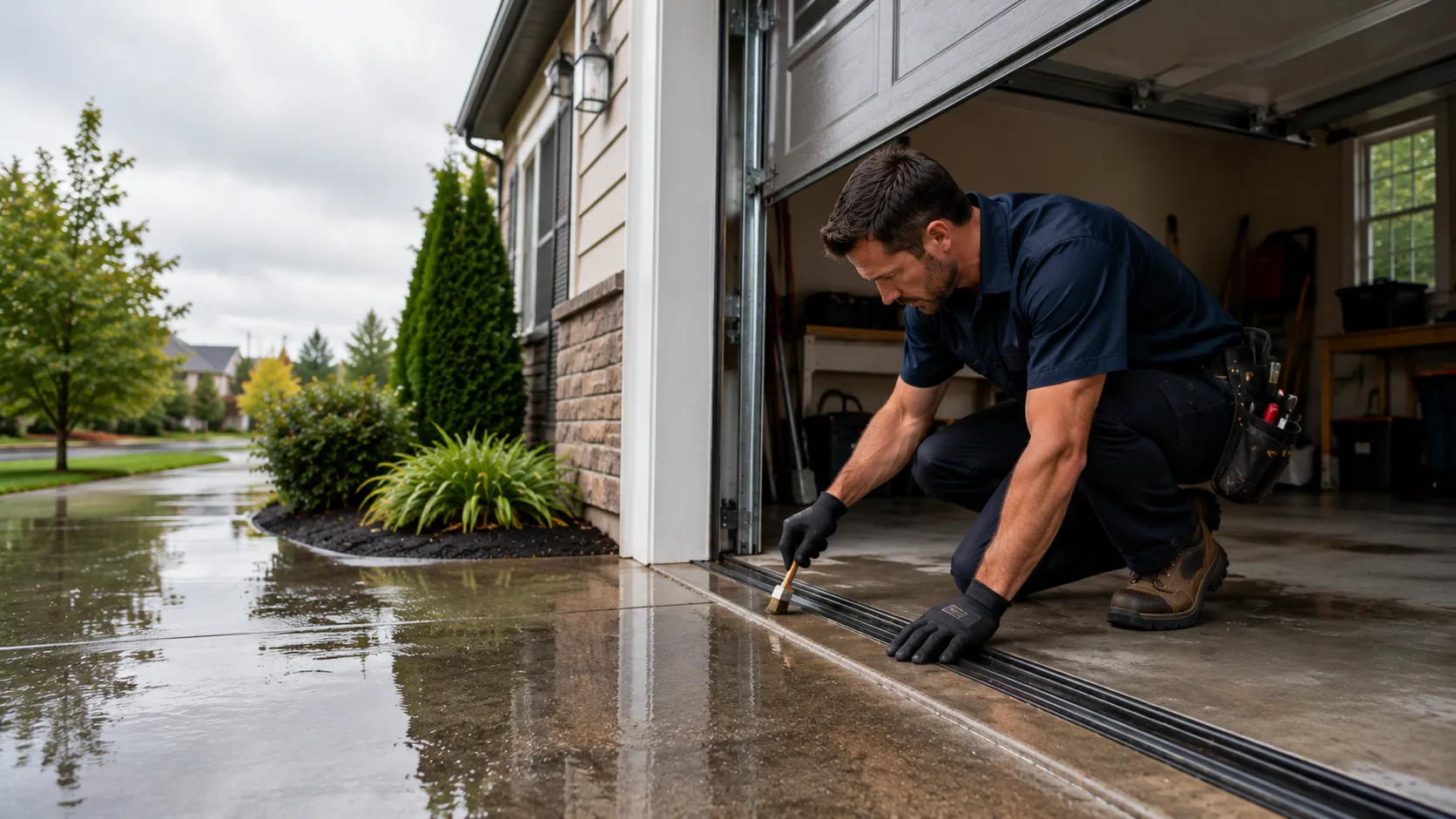
How We Can Help
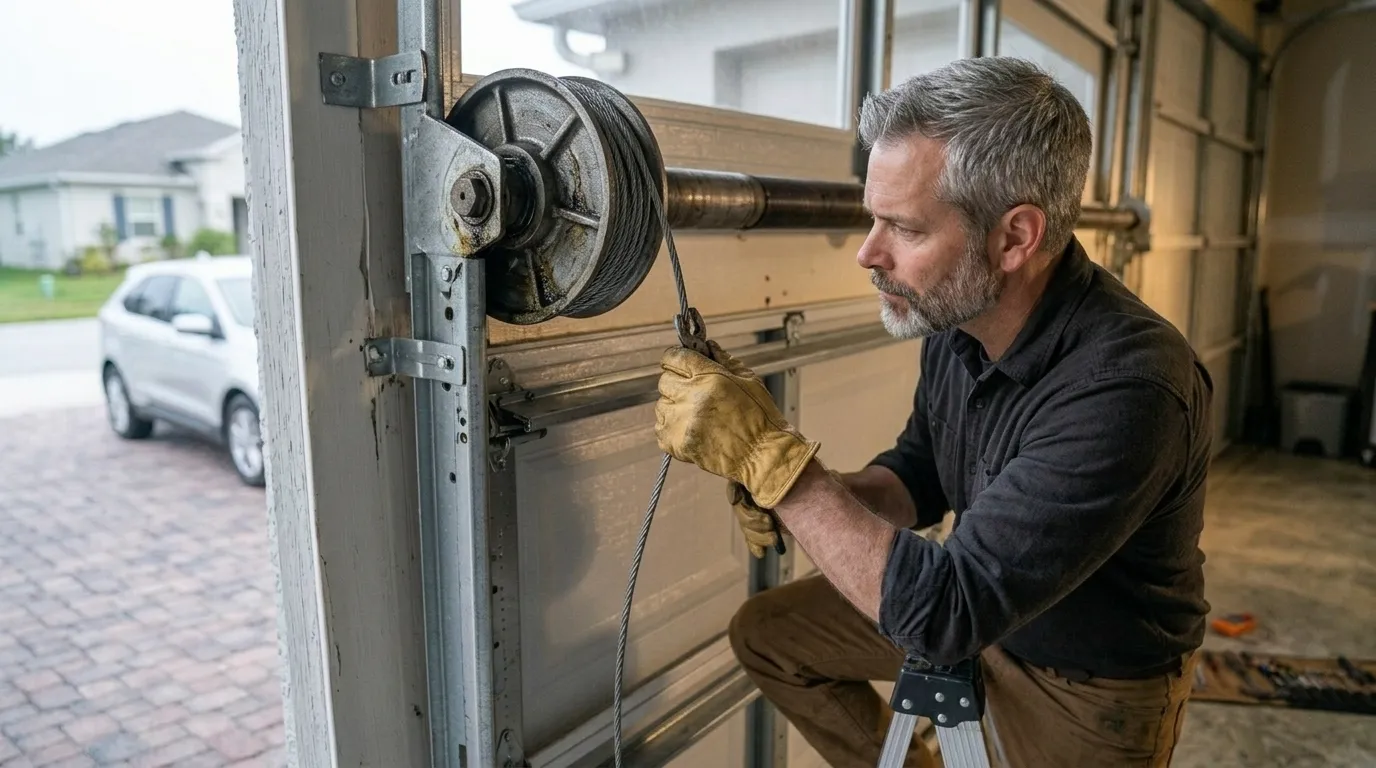
Garage Door Repair
Springs, cables, tracks, rollers, and openers fixed by a tech who explains the problem before touching anything.
Learn more →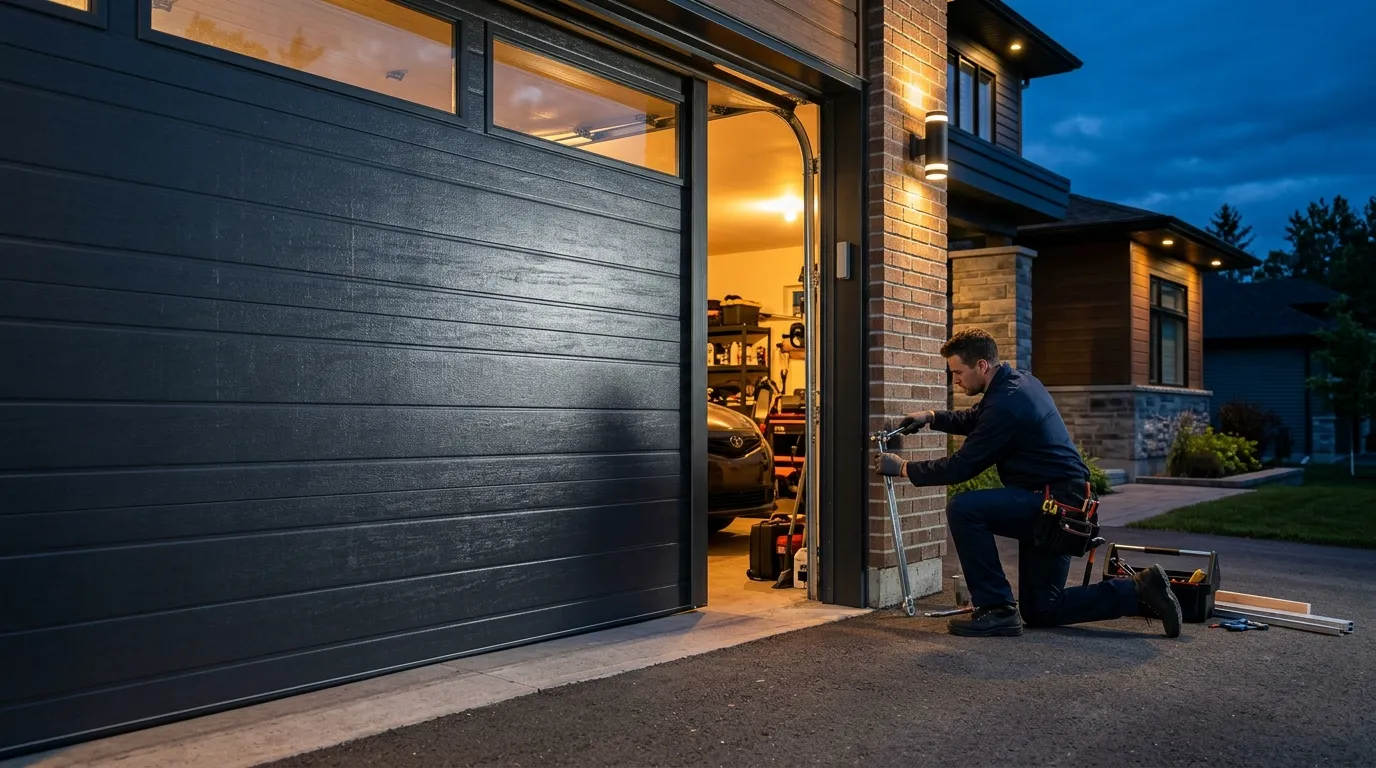
Garage Door Installation
New sectional doors sized and installed for the housing stock actually built in this area.
Learn more →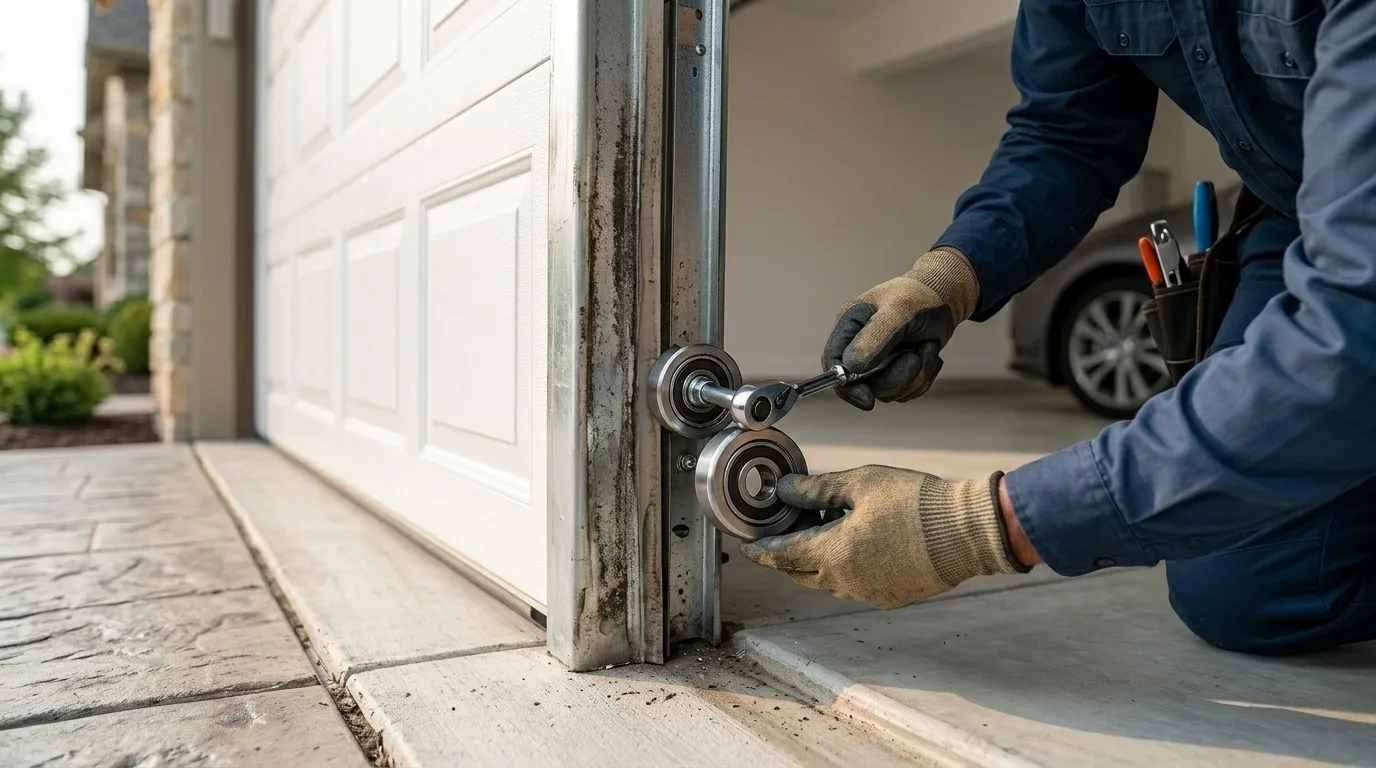
Garage Door Service
Tune-ups, lubrication, and safety checks that catch a small problem before it becomes a service call.
Learn more →Frequently Asked Questions
Why did my garage door spring break in the middle of winter with no warning?
Most springs that fail in cold weather were already fatigued from years of cycling. Cold steel is stiffer and less forgiving, so a coil that's near the end of its life is more likely to give out on a cold morning than a warm one. The cold doesn't cause the fatigue - it exposes it.
Can I just replace the one spring that broke?
You can, but most homeowners here choose to replace both springs on a double door even if only one failed, since the older, unreplaced spring is usually close behind and a mismatched pair wears unevenly. We'll tell you what condition the other one is in before you decide.
Is it safe to open my garage door manually if the spring broke?
If the spring is broken, the door has no counterbalance and can drop fast or won't lift at all. Don't force it. Leave the door where it is and call for the repair rather than trying to muscle it open or closed.
My house was built in the 1960s - does that affect the repair?
It can. A lot of the garages built during that stretch still have original torsion hardware sized differently than what's sold today, and some lack a safety cable through the coil. We check the existing hardware before quoting, since older setups sometimes need more than a spring swap.
Have a Door That Needs a Second Opinion?
Call and describe what it is doing - we will tell you what it likely is.